
As Mumbai’s air quality deteriorates, with several locations recording high pollution levels in recent days, construction and redevelopment activities have come under increased scrutiny from the Brihanmumbai Municipal Corporation (BMC). Since last year, the civic body has implemented measures to control dust and pollution from construction sites, including provisions to suspend work that violates prescribed pollution-control norms.
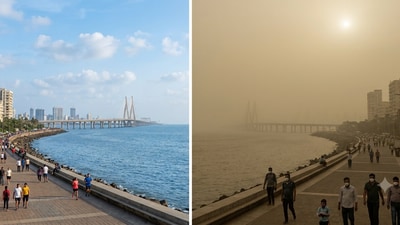
Here is what homebuyers, developers and other real estate stakeholders need to know about the BMC’s construction restrictions and the conditions under which work may be halted.
What is AQI and why does it matter?
The Air Quality Index (AQI) measures air pollution levels and indicates the potential health risks associated with the air people breathe. In India, the Central Pollution Control Board (CPCB) classifies AQI readings of 0–50 as good, 51–100 as satisfactory, 101–200 as moderate, 201–300 as poor, 301–400 as very poor, and 401–500 as severe. Higher readings indicate greater pollution and potential health risks.
Also Read:
According to BMC officials, construction activity can contribute to air pollution through dust generated by excavation, demolition, material handling, debris transportation, and vehicle movement at project sites. However, to address these sources, the BMC has prescribed dust-control measures for construction and redevelopment projects and strengthened monitoring and enforcement during periods of deteriorating air quality.
Also Read:
What are the BMC’s rules on construction bans due to poor air quality?
Over the past three years, the BMC has implemented several measures to mitigate worsening air quality in Mumbai. It has mandated AQI monitoring at construction sites, requiring real-time sensors and imposing compliance notices on errant builders. The civic body has issued 28-point guidelines for dust and pollution control, deployed ward-level flying squads to enforce the norms, and threatened to close construction and industrial activities if the AQI remains above 200.
Under the BMC’s air pollution mitigation framework, restrictions on construction activity depend on the severity and persistence of pollution levels. The civic body’s standard operating procedure for implementing the Graded Response Action Plan (GRAP), issued in November 2025, states that Stage IV measures will be implemented if Mumbai’s city-level or local area-wise AQI remains above 200 for three consecutive days.
had reported in January 2026 that, according to the Mumbai-based NGO Praja Foundation, which researches civic issues, the city’s Air Quality Index (AQI) worsened steadily between 2019 and 2022, rising from 92 in 2019 to 125 in 2022. However, over the last two years, AQI has also gone above 300 and 400 on several occasions.
How does worsening AQI affect homebuying decisions and construction activity?
AQI levels do influence home-buying decisions, particularly when a project is located near factories, industrial areas or power plants, a real estate developer said. However, they note that seasonal deterioration in AQI during winter has a limited impact on demand in specific neighbourhoods, as it is seen as a broader, country-wide phenomenon rather than a location-specific issue.
“A homebuyer in Worli may want to upgrade to a newer or better home in the same area, while someone in Borivali may prefer to move to another property in the vicinity. In a few cases, homeowners may relocate because of respiratory ailments linked to poor air quality, choosing areas with relatively better AQI. However, such cases are rare because moving to a different locality after living at the same address for a prolonged period is not easy,” a developer, who did not wish to be named, said.
Also Read:
Developers, however, acknowledge that worsening air quality poses challenges for construction activity, potentially slowing work and affecting project timelines.
“Addressing air pollution through measures such as water sprinkling and installing AQI monitors is also a moral responsibility for developers. Compliance may account for around 0.1% to 0.3% of the overall construction cost, certainly less than 1%. Navi Mumbai had clear skies 15 days ago, but the situation has since deteriorated. While measures do not significantly increase construction costs, suspensions of construction activity can raise costs because of delays,” said Dinesh Doshi, a Navi Mumbai-based developer and president of NAREDCO Raigad, the apex body of real estate developers.
DLF Ltd managing director and chief executive officer on October 17 that it did not foresee any challenges to its project completion timelines at present.
“But last quarter and possibly this quarter (Q3) could see a slight blip in construction outflows,” Tyagi said. He said that there are two factors: one is the upcoming festive season, and the other is the GRAP guidelines.