
For many professionals relocating to India’s tech capital, landing a job is no longer the hardest part; finding a place to live is. In a city where housing demand far outpaces supply, tenants say even the most basic expectations, such as ample sunlight, good ventilation, and reasonable rents, now feel less like standard features and more like rare luxuries.
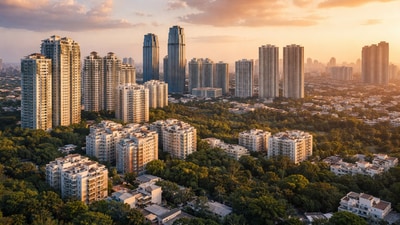
“Honestly, it is easier to find a job in Bangalore than to find a house. Sunlight and good ventilation are a premium – you almost feel like you are getting punished for expecting some basic necessities. Rents are sky-high. I would really like to understand who has this kind of money,” the user wrote.
Also Read:
Central hotspots are expensive, say tenants
Several users pointed out that prime neighbourhoods such as Koramangala, Indiranagar, Jayanagar and HSR Layout rarely offer affordable options with good amenities.
“In central areas, you will never find something frugal with good ,” one of the Redditors said, advising tenants to expand their search radius. Areas such as Ejipura, Domlur, Kodihalli, JP Nagar and BTM Layout were suggested as relatively better alternatives.
Tenants say they are increasingly willing to trade a 20–30-minute commute for better-value housing options. “These areas are still developing, so you’ll find more reasonable, newer houses,” the user noted, while advising that they be prepared to visit ‘10 to 20 properties’ before finalising a home.
Mismatch between rents and quality
Tenants say there is a clear mismatch between the rents being charged and the actual living conditions on offer.
One Redditor shared that they rented a 3BHK duplex in JP Nagar 5th Phase for ₹32,000, describing the kitchen as ‘horrendous’ and the neighbours as ‘problematic,’ leading them to move out within a year. Another cited a 1BHK in Ejipura priced at ₹26,000 with amenities like CCTV and covered parking, but called the rent unjustified, pointing out that the landlord asked them to vacate when questioned about a ₹3,000 electricity charge without a BESCOM bill.
In contrast, some relatively better deals were reported. A 1BHK in Kodihalli at ₹16,000 was described as ‘decent, neat and clean,’ while a 1RK penthouse in the same area for ₹12,000 was considered a ‘good deal,’ particularly due to its proximity to workplaces.
However, often came at a cost. A 2BHK in JP Nagar 7th Phase at ₹23,000 appeared attractive on paper but had mould issues in cupboards and poor parking management, leading to a six-month stay. Another unit in the same area at ₹24,000, though recently renovated, lacked a lift and had the landlord residing in the same building, something some tenants may find restrictive, Redditors said.
Meanwhile, a 2BHK in JP Nagar 6th Phase priced at ₹30,000 offered a lift, security, and parking, but was considered ‘a bit small for the price,’ despite its quiet surroundings and newer construction, they pointed out.
Also Read:
How sunlight and ventilation continue to fetch premium rents in Bengaluru?
Local brokers say rental variations within the same residential project are often driven by floor height, , and ventilation rather than solely by unit size or configuration.
According to them, in many mid-segment developments, ground-floor apartments typically rent for around ₹48,000– ₹50,000 per month, while similar units on higher floors, such as the fourth floor and above, can fetch between ₹50,000 and ₹60,000.
“Homes on higher floors tend to command a premium because of better airflow, more sunlight, and clearer views,” Sunil Singh of Realty Corp said, pointing out that the difference usually falls in the 10–15% range within the same building.
However, Singh noted that when are located on the same floor, rent differences are far less pronounced and are influenced more by unit positioning than elevation.
In low-rise buildings with three units per floor, for example, side-facing flats that receive better daylight and cross-ventilation may be priced at around ₹32,000 per month. In contrast, middle units with limited natural light and airflow typically show only marginal price differences, with rents adjusting only slightly with demand and tenant preferences.
(Disclaimer: This report is based on user-generated content from social media. HT.com has not independently verified the claims and does not endorse them.)