
When Cheryl Fernandes’s (name changed) 50-year-old building in Bandra underwent redevelopment, residents were promised a host of complimentary white goods, air-conditioners and LED TVs in bedrooms and living areas, along with a refrigerator, washing machine and a modular kitchen, among other add-ons.
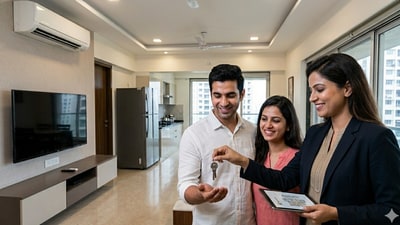
This reflects a broader shift in Mumbai’s redevelopment market, where developers are increasingly offering fully upgraded, ready-to-move-in homes with added perks to sweeten deals. The focus is moving beyond just additional square footage to delivering an enhanced living experience.
The rationale is straightforward: in a land-scarce city like Mumbai, competition among developers for redevelopment projects is intense. However, such offerings are still not the norm in prime areas such as Juhu, Bandra and South Mumbai, as rising resident expectations and complex redevelopment negotiations continue to shape the market.
Case study
Cheryl’s building, located in a prominent part of Bandra known for housing several Bollywood stars, underwent redevelopment in the second half of 2025. The developer has offered around 50% additional area to each tenant post-redevelopment.
In addition, society members are entitled to a one-time hardship compensation of ₹4,500 per sq ft and a one-time shifting charge of ₹1.75 lakh per member.
Also Read:
During the redevelopment period, residents will receive rental compensation of ₹1.50 lakh per month for temporary accommodation. The developer will also cover brokerage expenses, paying up to ₹1.50 lakh per member.
The benefits extend beyond financial compensation. Upon completion, homeowners will receive fully upgraded residences, including air conditioners in all bedrooms and the living room, Italian marble flooring, LED TVs, a modular kitchen, and appliances such as a microwave, refrigerator, and washing machine, among other additions.
Also Read:
Is offering freebies common during redevelopment?
According to real estate experts, the trend has been gaining ground, especially after COVID-19, but it is not yet universal. Developers are increasingly going beyond basic commitments to offer semi-furnished or fully furnished apartments, making their proposals more attractive.
“Earlier, the focus was on the corpus and additional square footage. Now, the question is: when I open the door on possession day, what does my home look like?” said Pushpamitra Das, Founder and Chairman of Justo Realfintech Ltd. He said that this shift from numbers to overall living experience is driving the furnished-apartment trend in redevelopment.
“Air-conditioners in the living room are now a baseline, and modular kitchens are standard in competitive projects. Wardrobes are expected. The real differentiation at the premium end is in offering full white goods, styled interiors, and move-in-ready homes, and this trend is quickly moving downmarket,” Das said.
Also Read:
He noted that the trend began in prime locations such as , where land scarcity intensifies competition among developers. “In some cases, over 20 developers have bid for a single society. When you’re one of many, you need to offer more than just the basics,” he said.
What do developers have to say about this trend?
According to Sharan Babani, promoter of Satguru Builders, whose firm has redevelopment projects in and around Bandra, offering semi-furnished homes with finished bathrooms, modular kitchens, false ceilings, and complete electrical fittings, the company has always maintained this as its baseline.
“Air-conditioning is also fully integrated from the design stage, allowing us to avoid façade damage, conceal outdoor units in a planned manner, and manage discharge water through dedicated piping. While this approach has become significantly more expensive over time, it ensures consistency, quality, and a truly move-in-ready product,” Babani said.
“Our redevelopment offers are typically 15–25% lower than others in the same micro-markets, even though our projects command a 20–25% premium in selling price. We don’t compromise on specifications or timelines. As newer developers enter these markets with cost assumptions from lower-priced areas, there is often a mismatch in expectations, which can lead to challenges for both tenants and developers,” he said.
Also Read:
However, developers also stress that providing has not become the norm. Developers maintained that projects with tighter margins offer more standardised, realistic solutions rather than fancy offerings.
“The practice has not become standard for all organisations yet. Higher tenant expectations and complex redevelopment negotiations lead to projects that require upgraded development standards. At present, this trend is largely concentrated in premium micro-markets such as South Mumbai and Bandra, where both property values and tenant expectations are significantly higher,” said Aayush Patel, Director, Atul Projects, whose company is involved in redevelopment projects in Mumbai.
“In projects with tighter margins, offerings tend to be more standardised and cost-conscious. Developers typically hand over finished apartments with essential fixtures, including basic flooring and kitchen fittings, standard bathroom fixtures, and select air-conditioning units. Personally, even our company follows a project-specific approach, tailoring developments based on the micro-market, end users and overall economics. However, we maintain baseline standards for construction quality, finishes and key elements that define the project,” Patel said.