
Third-party motor insurance is meant to pay for the damage caused in road accidents. In practice, that payment is taking years to come through, with lakhs of claims stuck in the legal system.
More than 10 lakh cases are currently pending before Motor Accident Claims Tribunals (MACTs), specialised courts that handle accident compensation claims, across the country.
For many families, the wait for compensation stretches from three to five years. In some cases, it takes even longer. The problem is not that compensation does not exist. It is that the system delivering it is slow, complex and difficult to access.
This is the reality of third-party motor insurance in the country, a product every vehicle owner is legally required to buy but one that often struggles to deliver support when it is needed most.
In the fourth story in our series Motor Mess, which looks at issues in motor insurance, we spoke to industry experts to understand why claims take years to settle and what is slowing the system down.
Third-party motor insurance covers the damage your vehicle causes to others, but what it actually includes and excludes is far less understood.
“Third-party motor insurance covers your legal liability towards injury, death, or property damage caused to a third party. It does not cover damage to your own vehicle, your own injuries, or theft,” said Bikash Choudhary, CEO of FatakSecure, an insurance distribution and risk advisory platform.

For bodily injury or death, liability is effectively unlimited as determined by tribunals, while property damage is capped at Rs 7.5 lakh.
“At its core, third-party insurance is a financial mechanism to compensate someone who suffers because of your vehicle. It is not designed to cover your own loss,” said Rajendra Upadhyay, Chief Growth Officer at Choice Insurance Broking.
What it does not cover is equally important.
Under a third-party policy, your own vehicle is not protected. Any repair cost after an accident, theft, fire or flood has to be borne by the owner. There is no cover for damage to your own property, no roadside assistance, and no add-ons of any kind unless you opt for a comprehensive policy.
That gap between perception and reality is where confusion begins.
“In India, third-party insurance is bought to comply with a law, not to understand a product. The renewal cycle reinforces this. The customer pays, receives a document, files it, and moves on,” said Saurabh Vijayvergia, Founder and CEO of CoverSure, a digital insurance platform.
“The system has not been designed to inform. It has been designed to transact.”
He added that the confusion starts with the term itself.
“‘Third party’ is counter-intuitive. It protects others from you, not you from others. Customers hear ‘insurance’ and assume protection. They assume their vehicle is covered. It is not,” Vijayvergia added.
Choudhary told IndiaToday.in that many buyers do not even know how to file a third-party motor insurance claim or what documents are required, and often settle minor disputes informally instead of using insurance.
“For most consumers, it is a line item needed to avoid traffic penalties, not a product they actively value,” he said.
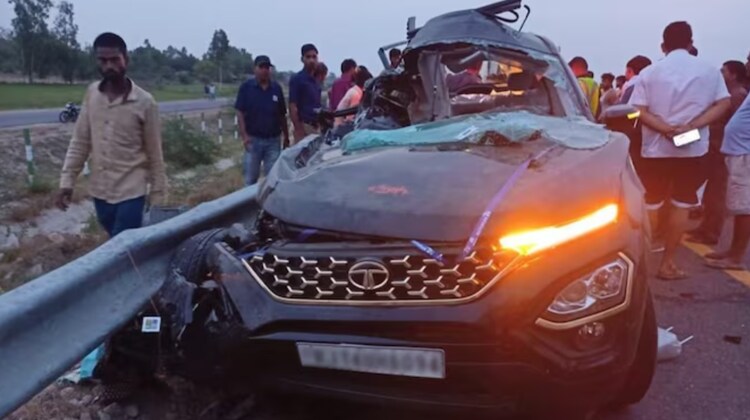
When a compensation claim is filed after an accident, the process moves out of the insurer’s hands and into the legal system. Unlike own-damage claims, third-party claims are decided by MACTs and begin with filing a First Information Report (FIR).
“The legal mechanism exists, but the gap between having a right and being able to exercise it is significant,” Vijayvergia said.
For many victims, even this first step can be difficult. “The first step is filing an FIR. Without a police report, the entire downstream process cannot begin. For many accident victims, particularly in rural or low-income settings, this itself is a barrier,” he said.
Once a claim enters the system, delays begin to build. “On paper, the framework is clear. In reality, the process remains heavy, involves legal intervention, and takes time,” said Choudhary.
“Third-party claims can be very long-tailed, especially in cases involving death or serious injury, because assigning a financial value to human life is inherently complex.”
The numbers underline the scale. As of 2025–26, there are around 10.7 lakh pending MACT cases involving approximately Rs 96,000 crore.
Nearly 25% of these cases have been pending for more than five years, Vijayvergia said, citing data. He further added that the average settlement time is between three and five years.
“The Motor Vehicles Act was designed to provide speedy compensation. A five-year wait is not a speedy remedy for a family that has lost its primary earner,” Vijayvergia said.
Upadhyay explained that the structure of the law itself contributes to this delay.
“Under Indian law, claimants can choose between a no-fault route, which offers fixed compensation quickly, and a fault-based route, where compensation is linked to the extent of loss but requires establishing liability,” he said.
“The no-fault route ensures speed, but the fault-based route is often necessary in serious cases. That creates a trade-off between speed and adequacy.”
The scale of third-party motor insurance is significant. Gross direct premium income from this segment crossed Rs 60,871 crore in FY25, according to global market research and consulting firm Mordor Intelligence.
That is a large pool of money collected from a product that, for the person paying it, offers no protection for their own vehicle.
“You are paying to protect others from your vehicle. Your own vehicle has zero protection under this product. The premium buys compliance, not personal financial protection,” Vijayvergia said.
Premiums are not market-driven. They are fixed by the regulator based on vehicle category and engine capacity.
Currently, third-party premiums range from around Rs 2,100 for smaller cars to Rs 3,400 for mid-sized vehicles. These are expected to rise further, with proposals to increase rates by up to 25% in the coming years.
Despite widespread adoption, awareness remains low.
Nearly 70% of low-income and 63% of high-income households are unaware of their compensation rights under motor insurance.
“If people who have bought and renewed the same policy for years do not understand their rights, the problem is structural, not individual,” Vijayvergia said.
One assumption is that delays are driven by a lack of funds. Data suggests otherwise. The issue lies in the process.
“After the FIR, claimants must file petitions with the tribunal, attend hearings, present evidence and go through cross-examination, often without legal assistance,” Vijayvergia said.
Awareness gaps make this harder. Only around 12% of accident victims are aware of free legal aid services.
The rest either navigate the system alone or rely on intermediaries. “These intermediaries charge anywhere between 20% and 40% of the final compensation, further reducing what victims receive,” he said.
Insurers also contest claims on technical grounds such as licence validity, fitness of the vehicle, or policy conditions. Each of these disputes adds time.
“The compensation mechanism exists on paper. Its delivery, in practice, is slow, complex and disproportionately inaccessible to the people who need it most,” Vijayvergia said.
For families already dealing with loss or injury, delays come with additional costs. Accessing compensation often requires time, effort and, in many cases, a share of the final payout.
Another issue is access itself. While the right to compensation exists, the ability to realise it remains uneven.
For accident victims, the system feels slow and difficult to navigate. For policyholders, its value remains distant. “It does its job for victims, but for customers the value feels invisible unless something goes wrong,” said Choudhary.
“Treating third-party insurance as ‘enough’ is a mistake. It is only the minimum required by law, not a complete protection solution,” he said.
At its core, third-party motor insurance is designed as a social safety net. But its effectiveness depends on how quickly compensation is delivered.
“The compensation mechanism exists on paper. Its delivery, in practice, is slow, complex and disproportionately inaccessible,” Vijayvergia said.
In hit-and-run cases, the gap is even more visible. The Solatium Scheme, a government-backed fund for hit-and-run victims where the offending vehicle cannot be identified, provides Rs 2 lakh for death and Rs 50,000 for grievous injury.
Yet, less than 0.5% of eligible claimants access it.
A legal right accessed by fewer than one in 200 eligible claimants is not a functioning protection mechanism.
When asked about a fix to the third-party motor insurance problem, Upadhyay said, “If there is one reform that can significantly improve the system, it is simplifying and accelerating the claims process.”
“Faster reporting, better coordination between police, hospitals and insurers, and quicker interim relief can make a meaningful difference,” he added.
Upadhyay highlighted that the purpose of the product also needs to be communicated better. “This is one of the most socially impactful forms of insurance, but it is still seen as a compliance requirement. That needs to change.”
Vijayvergia pointed to a simpler fix. “At the point of sale, customers should be clearly told what the policy does and does not cover. That alone can change how people understand and value this product.”
As the experts put it, the real opportunity lies in making the system more transparent, efficient and better understood. Ultimately, insurance is about trust, and that trust is built when the system delivers in moments that matter most.