
A major fire broke out in a flat on the 12th floor of a high-rise tower in Noida on June 5, adding to a string of recent fire incidents in the National Capital Region.
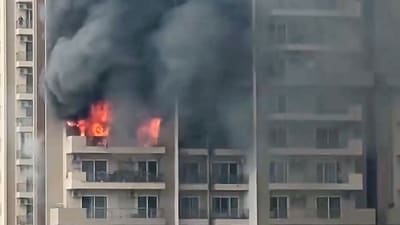
Hindustan Times quoted Pradeep Kumar, Chief Fire Officer, Gautam Buddh Nagar, as saying that “Due to the presence of firefighting equipment within the building, our vehicles were not required for firefighting operations. Firefighters wearing specialised suits and breathing apparatus entered the affected flats and completely doused the fire. The fire was likely caused by a short circuit in an air conditioner.”
The incident comes just hours after the that claimed 21 lives and barely two weeks after another blaze erupted on the 27th floor of the same housing society, reportedly due to a short circuit in an air-conditioner. It also follows a major fire in a high-rise residential tower in Indirapuram, Ghaziabad, on April 29 and another incident that engulfed two luxury apartments in Gurugram’s Sector 63A, raising fresh concerns about fire safety in high-rise residential buildings across the NCR.
The recent incidents have heightened concerns about fire safety during the peak summer months, when air conditioners and electrical systems operate under heavy loads, making unobstructed emergency exits even more critical. The incidents have also renewed calls for stricter fire-safety compliance and regular audits of high-rise residential buildings.
Here’s what residents of should know:
1. Maintain air conditioning units regularly
Air conditioners, a common cause of electrical fires, should ideally be serviced before the onset of summer and at least once a year before intensive use. Maintaining a moderate temperature setting of around 24°C is also advisable, as operating units at extremely low temperatures for prolonged periods can increase stress on electrical systems, advises Munish Kumar, founder director of EHS Guru Sustainable Solutions Pvt Ltd.
2. The first line of defence against small fires is the fire extinguisher
He stressed that fire extinguishers remain the first line of defence against small fires and should be readily available in common areas of apartment buildings.
In the event of a fire in a flat, residents and responders are more likely to access extinguishers in corridors and common areas than those kept in individual apartments, he explains.
3. Don’t use lifts in case of a fire
Fire safety experts advise residents to use staircases rather than lifts during a fire, as pressurised stairwells are designed to remain relatively smoke-free and provide the safest escape route. They also stress the importance of regularly cleaning kitchen chimneys to prevent oil deposits from igniting and ensuring that fire water systems, including tanks and pumps, remain operational.
4. Fire safety infrastructure should be regularly maintained
Regular fire safety audits, mandated under the National Building Code, can help identify deficiencies in fire-fighting equipment, electrical systems and emergency preparedness. In addition, smoke detectors and sprinkler systems in apartments and common areas should be routinely checked and protected from damage during renovation work, particularly in high-rise buildings where such systems are critical for early detection and response.
“Fire safety in residential and commercial buildings begins with preventive maintenance,” according to Kumar.
Also Read:
Kumar said the availability of fire-fighting equipment in high-rise buildings is generally not a major concern, as builders are required to install such systems and authorities verify their presence while issuing and renewing fire safety clearances. The bigger challenge is ensuring that these systems remain fully operational. Regular inspections and operational assessments of fire alarms, hydrants, sprinklers and other safety systems are critical to ensuring they function effectively during an emergency.
Homebuyers’ associations also said the should serve as a wake-up call, prompting a thorough review of gaps in fire safety preparedness, compliance and enforcement across residential high-rise buildings.
“As representatives of the resident community, we believe that the current vulnerability of high-rise buildings stems largely from fragmented fire safety regulations and a lack of continuous, institutionalised oversight. Once a project receives its initial fire No-Objection Certificate (NOC) and is handed over, the mechanisms to ensure the long-term health of complex firefighting systems remain disjointed and largely reactive,” said Rajiva Singh, founder member and former president, Noida Federation of Apartment Owners Associations.
To prevent future tragedies, the Association has recommended mandatory annual or biennial fire safety audits involving the fire department, independent experts and AOAs, along with standardised checks to ensure that critical systems such as wet risers, fire water tanks, sprinklers, smoke detectors and fire lifts remain fully operational. It has urged authorities to conduct and training programmes with residents, security personnel and facility management teams to improve emergency preparedness.
5. Limited reach of fire tenders raises concerns for high-rise fire safety
Kumar highlighted the limitations of conventional fire tenders in tackling high-rise fires. Most conventional hydraulic platforms and aerial ladder trucks used by fire departments can typically reach between 4 and 12 floors, depending on the model and operating conditions.
However, for , external firefighting becomes increasingly difficult. Fire services depend primarily on internal fire-safety infrastructure such as wet risers, hydrant systems, sprinklers, smoke-extraction systems, fireman’s lifts and pressurised staircases. These systems are designed to enable firefighters to tackle fires from within the building rather than from outside, he explains.
6. Can drones help in combating high-rise fires?
Emerging technologies such as firefighting drones are also being explored. Equipped with thermal imaging cameras, drones can conduct rapid aerial assessments of upper floors, identify hotspots, locate trapped occupants and monitor fire spread at heights that may be difficult for conventional equipment to reach, explains Kumar.
Firefighting teams can use drone feeds to monitor changing conditions and improve firefighter safety during operations. Some advanced drones can carry fire-extinguishing payloads or connect to water-mist systems for limited firefighting operations, he said.
However, Kumar cautioned that technology alone cannot compensate for fundamental fire-safety failures. Drones cannot overcome blocked emergency exits, locked staircases, non-functional alarms, inadequate smoke management systems, or poor building maintenance. Factors such as dense smoke, strong winds, extreme heat and battery limitations can also restrict drone operations.
Also Read:
“While drones can significantly enhance emergency response by providing real-time situational awareness, identifying hotspots and assisting rescue operations, the most effective protection against fire remains strict compliance with fire-safety norms. Consequently, the effectiveness of these systems, along with functional emergency exits, robust smoke-management measures and regular maintenance, remains the most critical factor in ensuring occupant safety during a fire, he added.