
Abu Dhabi has announced a temporary freeze on rent increases across residential and commercial properties, offering immediate relief to tenants amid the ongoing US-Iran war. The measure is expected to moderate rental growth in the affordable housing segment, strengthen tenant retention and support long-term market stability, say real estate experts.
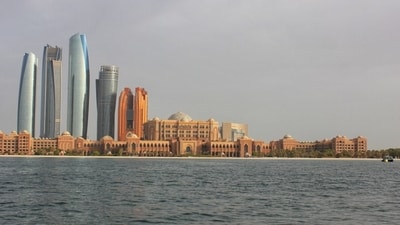
The decision, announced by the Abu Dhabi Real Estate Centre (ADREC) on June 2, reduces the emirate’s annual rental increase cap from 5 per cent to 0 per cent with immediate effect and until further notice, according to a report by Khaleej Times.
Property experts believe the move could ease financial pressure on tenants and businesses by putting downward pressure on rents. However, they caution that it may affect rental yields and investment returns for property owners.
It should be noted here that in 2024, the emirate introduced its first official rental index to provide benchmark rental values for landlords and tenants. It also operates the Tawtheeq system, which records and attests all residential and commercial tenancy contracts.
For Indians living in Abu Dhabi, the decision could bring significant savings. Indians constitute one of the largest expatriate communities in the UAE, and many households typically face annual rent increases when renewing leases. Small business owners are also expected to benefit from greater cost certainty, said experts.
Also Read:
However, experts do not expect a similar blanket rent freeze in Dubai, where Indians are among the largest groups of property buyers. Unlike Abu Dhabi, Dubai’s real estate market is heavily driven by international investment, and analysts warn that strict controls on rental growth could weaken investor sentiment and potentially slow future housing supply.
What has changed?
Under the new measure, landlords cannot increase rents when renewing tenancy contracts. All tenancy renewals will be processed with a 0 per cent rent increase, effectively freezing rents at existing levels, the Khaleej Times reported.
The rule also applies to new tenancy agreements for properties that were previously rented. According to ADREC, such properties must be offered at the same rental value as the previous contract, preventing landlords from raising rents between tenants, the report said.
Does the rent freeze apply to contracts renewed before June 2?
One of the most common questions following the announcement has been whether tenants who renewed their contracts shortly before June 2 can benefit from the freeze.
ADREC has clarified that the measure is not retrospective. Any tenancy contracts that were renewed and registered before the announcement remain valid under their existing terms. The 0 per cent cap applies only to renewals processed from the date the circular was issued, Khaleej Times reported.
Also Read:
Who benefits from the measure?
Existing tenants renewing contracts after June 2.
New tenants renting properties that were previously leased.
Businesses and industrial occupiers renewing tenancy agreements.
How long will the rent freeze remain in place?
ADREC has not announced an end date for the measure, Khaleej Times said. It noted that the rent freeze will continue until further notice, and any future changes will be communicated through official channels. Until then, landlords will not be permitted to increase rents on renewed tenancy contracts across Abu Dhabi, the Khaleej Times reported.
What real estate experts have to say?
For Indian investors, whose primary UAE real estate focus is Dubai, Abu Dhabi is still an emerging market. Indians are not the dominant cohort yet, though foreign buyers accounted for over 60% of Abu Dhabi’s residential sales value in 2025, as per Anarock.
“Those who are exposed to Abu Dhabi face an immediate cap on rental repricing but long-term holders are largely insulated as capital appreciation remains robust with residential values seen rising 15-16% in 2026,” points out Anuj Kejriwal, CEO, Retail and CEO, Europe, Middle East and Africa, ANAROCK Group.
Abu Dhabi’s recent policy signal freezing residential and commercial rents deserves a measured market reaction, not alarm. The freeze caps near-term rental upsides and moderates immediate return on investment (ROI), countering a new rental index that forecast 25–30% hikes in certain zones – however, long-term investors remain anchored by the region’s strong fundamentals, he said.
“Abu Dhabi’s decisive move to hikes by resetting the annual cap from 5% to 0% is a step toward absolute market stability. For existing tenants and the vibrant Indian expat community, who make up over 35% of the UAE’s population, this policy provides immense financial predictability. By locking in baseline rates and preventing landlord premiums on vacant units, it directly checks the recent 8% to 12% surge in rents,” said Pyush Lohia, Managing Director, Lohia Worldspace.
Will the blanket rental freeze be extended to Dubai?
It is very unlikely that a blanket rental freeze will be extended to , given its unique, transparent index-linked regulatory environment. Dubai authorities prefer market mechanisms rather than administrative caps and are more prone to surgical interventions such as tightening allowable increase thresholds on its rental index, said Kejriwal.
Also Read: