
Even as preparations are underway for kickstarting the cluster redevelopment project at Kamathipura, the Maharashtra Housing and Area Development Authority (Mhada) has set its sight on redeveloping another expansive locality in south Mumbai – Umerkhadi, also known as Dongri.
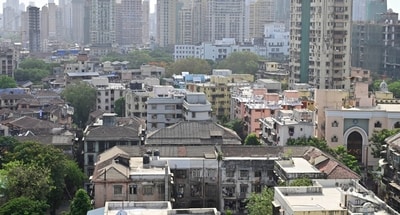
According to the redevelopment proposal, which is still at a preliminary stage and which HT has seen, the project will be spread over 6.23 acres, and all 81 buildings on site will be pulled down to make way for seven towers with 40-81 floors. The project will be executed on a construction and development agency model via tendering, and Mhada will make a profit of ₹1,041.74 crore after rehabilitating more than 2,000 residential and commercial occupants.
If the project comes through, it would be the third cluster redevelopment project in south Mumbai after the revamp of Bhendi Bazaar and Kamathipura. The Bhendi Bazaar redevelopment project – currently in its second phase – is being executed by the Saifee Burhani Upliftment Trust, a community organisation. For the revamp of Kamathipura, Mhada has appointed a consortium comprising Bhagirathi Housing Private Limited and Maathi Developers Private Limited. A letter of approval in favour of the consortium was issued in April and a special purpose vehicle will have to be incorporated, followed by financial closure as well as preparation and submission of the master plan before work can commence on ground.
In case of Umerkhadi, the redevelopment project will span 6.23 acres to the west of Sandhurst Road railway station, between Sardar Vallabhbhai Patel Road in the south and Ramchandra Bhatt Road, popularly known as JJ Hospital Road, in the north. Towards the west, it may stretch till the JJ flyover.
The project would entail a cost of ₹4,501.97 crore, and Mhada would make a profit of ₹1,564 crore if it executed the revamp itself. If executed via a construction and development agency, Mhada’s profit would stand at ₹1,041.74 crore, documents accessed by HT show.
Mhada sources told HT that a feasibility check had been run on the revamp proposal and the project had been found viable.
According to the proposal, the project site has a total of 1,928 residential and 268 non-residential tenements across 81 buildings, most of them aged over 60 years. All tenement holders would be rehabilitated on-site, apart from receiving transit rent for four years, during the execution of the project. For residential tenants, the transit rent would be ₹25,000 per month for the initial year, ₹27,500 in the second, ₹30,250 in the third and ₹33,275 in the fourth year. Non-residential tenants would be entitled to a rent of ₹100 per square foot, with a 10% increment each year. Since a majority of the buildings are cessed, property owners would also have to be compensated, officials said.
Over the four-year project duration, ₹98.40 crore would be spent on paying transit rent, and an additional corpus of ₹11.16 crore would be kept aside, at ₹50,000 per rehabilitation unit.
Though Mhada has repeatedly justified cluster revamp as a means of upgrading a locality’s civic amenities, the Umerkhadi plan does not factor in parking slots equivalent to the number of tenements.
Parking space would be provided based on tenement sizes in the towers, divided into four groups, the plan says. For tenements with carpet area up to 45 sq m, one parking slot would be provided per eight tenements. For tenements with 45-60 sqm carpet area, one slot would be provided for every four tenements. Tenements measuring 60-90 sq m would get one slot for every two tenements, while tenements of over 90 sqm would get a parking slot each.