
Mumbai’s housing market continues to scale new heights, with luxury projects in sought-after neighbourhoods such as Worli and Malabar Hill commanding prices of nearly ₹3 lakh per sq ft. Yet behind the record-breaking sales and gleaming towers lies a stark reality: for nearly a month, residents across the city, including those living in some of its most expensive homes, have been dealing with a 10% water cut imposed by Brihanmumbai Municipal Corporation (BMC). The situation underscores a widening gap between real estate growth and the city’s infrastructure capacity.
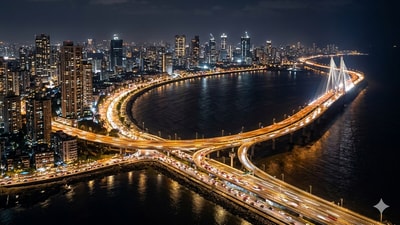
According to real estate experts, while real estate has expanded rapidly, water infrastructure has struggled to keep pace with the city’s growing population and rising demand.
Mumbai draws most of its water supply from a network of seven lakes located outside the city limits, including Bhatsa, Upper Vaitarna, Middle Vaitarna, Modak Sagar, Tansa, Vihar and Tulsi. Together, these reservoirs supply roughly 3,800 million litres of water per day to a city of more than 12 million residents.
According to BMC estimates, the demand for water in Mumbai exceeds 4,200 million litres per day. The gap is filled by the government and privately run water tankers in the city.
The latest water cut was imposed on May 15, 2026, amid concerns over dwindling reservoir levels and the need to conserve supplies until the monsoon arrives. According to BMC officials, the city’s seven lakes, which provide Mumbai’s drinking water, are collectively at around 13% of their total storage capacity. The available water stock is estimated to be sufficient to meet the city’s requirements for the next 45 to 50 days.
Also Read:
What is the connection between Mumbai’s real estate growth and drinking water infrastructure?
point out that high property prices and water infrastructure do not have a direct impact. However, often invest heavily in amenities such as swimming pools, clubhouses, landscaped gardens and advanced security systems. Water supply, however, remains dependent on public infrastructure managed by civic authorities and on private water tankers.
“Initiatives like rainwater harvesting and recycling of water through a sewage treatment plant (STP) in bigger housing societies ensure that non-potable water is recycled and can be reused. While these measures help reduce dependence on municipal supply, they are not sufficient to completely offset citywide shortages,” said Divyesh Trivedi, a real estate consultant from Central Mumbai, which houses several luxury projects in the city.
Also Read:
What is BMC doing to augment the drinking water supply?
To address recurring water shortages, Mumbai is pursuing a seawater desalination project on the lines of cities such as Dubai, Singapore, and Tel Aviv, which rely heavily on desalinated water for drinking.
The BMC has awarded a contract to Israel-based water technology company IDE Technologies to develop a desalination plant at Manori in Mumbai. The project will initially convert 200 million litres of seawater into potable water per day, with the capacity to expand to 400 MLD in the future. The project secured key environmental clearances in December 2025 and is currently moving through the final regulatory approval stage. Once fully operational, it is expected to supply 10% of Mumbai’s water requirement.
Apart from converting seawater into drinking water, the BMC is pursuing the Gargai and Pinjal dam projects in Palghar district near Mumbai. The Gargai dam is expected to add about 440 million litres per day (MLD) to the city’s water supply, while the proposed Pinjal project could contribute around 865 MLD. Together, the projects aim to meet rising demand from Mumbai’s growing population and reduce dependence on existing reservoirs, according to BMC officials.
Also Read:
According to BMC officials, construction of the Gargai Dam is slated to begin in October 2026 and become operational by 2029. The proposed Pinjal project, which could add another 865 MLD, is still in the planning and approval stages as part of the Mumbai Civic Body’s long-term strategy to secure the city’s future water needs.