
Mumbai’s real estate market is entering a new phase, with large corporate houses betting on cluster redevelopment projects that are unlocking some of the city’s most valuable land parcels. For decades, redevelopment in Mumbai was largely confined to individual housing societies. However, a combination of acute land scarcity, ageing housing stock and supportive government policies has shifted the spotlight to cluster redevelopment, transforming it into one of the most attractive opportunities in the city’s property market.
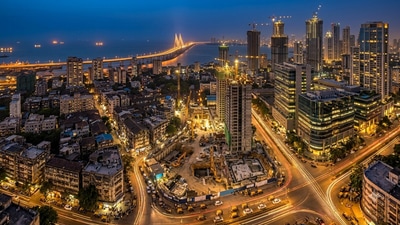
The segment is now drawing interest not only from established real estate developers but also from some large conglomerates. Their entry is expected to expand the overall redevelopment market rather than simply redistribute existing market share. With deeper balance sheets, stronger execution capabilities and access to institutional capital, these players are well-positioned to undertake larger and more complex projects, accelerating urban renewal while raising execution standards across the sector, said real estate experts.
They believe that the participation of conglomerates could also serve as a template for other cities grappling with ageing urban infrastructure and land constraints. If supported by enabling policy frameworks and redevelopment incentives, similar large-scale investments could emerge in other metropolitan markets across the country.
What is cluster redevelopment?
Cluster development is an urban redevelopment approach in which multiple adjoining buildings or plots are combined into a single large project. It enables better planning, improved infrastructure, wider roads, open spaces, and amenities, while supporting the rehabilitation of existing residents and more efficient land use in crowded cities.
Examples of cluster redevelopment in the Mumbai real estate market include MHADA layouts such as Motilal Nagar (Goregaon), Abhyudaya Nagar (Parel), Adarsh Nagar (Worli), Bandra Reclamation, and GTB Nagar (Sion), as well as Kamathipura. Several private housing societies also undergo cluster redevelopment.
Under MHADA’s Construction and Development Agency (C&DA) system, developers are appointed to redevelop entire housing clusters while eligible residents receive rehabilitation apartments, transit rent compensation and corpus funds. MHADA has said the objective of these projects is to improve residents’ quality of life through planned urban development and modern infrastructure.
At present, MHADA is undertaking 11 major redevelopment projects under the C&DA model across nearly 925 acres in Mumbai. According to the authority, these projects are expected to benefit more than 80,000 residents living in ageing colonies constructed decades ago. Along with MHADA, the slum rehabilitation authority (SRA) has also identified slum clusters in the Mumbai real estate market, which will be taken up for redevelopment.
Also Read:
Big corporates entering the cluster redevelopment space
Last month, leading corporate houses and real estate developers, Adani Realty, Lodha Developers, and JSW Realty and Infrastructure, along with Reliance Industries Ltd (RIL)’s led consortium, were competing for the city’s largest cluster redevelopment projects floated by MHADA.
In April 2026, MHADA floated bids for cluster redevelopment in these three prime areas, collectively measuring 206.49 acres.
The three localities are planned for cluster redevelopment through the Construction & Development Agency model. Adani Properties Private Limited has emerged as the highest bidder for the Adarsh Nagar and Bandra Reclamation projects, while the SVP Nagar project in Andheri West was won by the consortium led by JSW Steel. The consortium comprises Hanura Realty (a subsidiary of JSW Steel), Chandak Realtors, Premsagar Infra Realty and Vantier Realty.
Earlier this month, Reliance Industries’ real estate arm, Reliance 4IR Realty Development, as part of a consortium, secured the redevelopment rights for the 101-acre Juhu Lane, Gilbert Hill slum cluster in Mumbai’s Andheri, marking the conglomerate’s entry into the city’s slum redevelopment sector. Three companies had expressed interest in redeveloping more than 100 acres of prime land around Gilbert Hill, including JSW Realty and Infrastructure Private Limited, Reliance 4IR Realty Development Limited, and Shapoorji Pallonji Real Estate Private Limited.
What factors are driving the growing interest of large corporates in Mumbai’s cluster redevelopment projects?
According to real estate experts, a combination of policy reforms and the sheer scale of redevelopment opportunities has prompted large corporates to enter Mumbai’s cluster redevelopment segment.
“For large corporates with patient capital and strong execution capabilities, these projects offer access to sizeable development potential in established micro-markets where land acquisition opportunities are increasingly scarce,” said Gulam Zia, International Partner, Senior Executive Director, Knight Frank India.
“The entry of deep-pocketed players is likely to expand the redevelopment market rather than merely redistribute market share. Their ability to undertake larger and more complex projects can accelerate urban renewal, improve execution standards and bring greater institutional capital into the sector,” Zia said.
Maharashtra passed its slum cluster redevelopment framework in November 2025. Developers could buy connected plots of land of 50 acres or more without having to get permission from each resident. “The permission part was a massive hurdle that had kept big names away. It finally made economic sense to add more development rights and higher FSI incentives,” said Santhosh Kumar, Vice Chairman – ANAROCK Group.
“Another entry point came with MHADA’s C&DA model for redeveloping colonies. It’s mostly because of the new policies, but the sheer size of projects like Dharavi and Motilal Nagar shows that Mumbai’s backlog of redevelopment work has reached a point where big money wants to come in,” Kumar said.
In November 2025, to fast-track the redevelopment of Mumbai’s slums and move toward a slum-free city, the consent will no longer be required for the group redevelopment of slum clusters, according to a Hindustan Times report.
According to a government resolution (GR) issued on November 13 last year, the state allowed slum clusters on a minimum contiguous land area of 50 acres, of which more than 51% shall be slum area. However, for slum clusters below 50 acres, the consent of slum dwellers will be required.
Also Read:
Cluster redevelopment projects in Mumbai amid geopolitical uncertainty
According to Kumar, despite global and geopolitical uncertainties, Mumbai’s redevelopment story remains largely insulated because it is driven by domestic demand and government support rather than international factors.
” is all about domestic demand. Global stability affects export-oriented industries, but real estate, especially housing rehabilitation, depends on what people want locally and on how much help the government provides. The simple investment idea is to secure land rights through redevelopment contracts, house current residents for free, and earn money over 10–15 years from the free-sale component. Patient capital always wins when it comes to Mumbai real estate,” Kumar said.
Kumar said that the entry of conglomerates such as Reliance Industries and Adani Group into Mumbai’s cluster redevelopment market could also pave the way for similar investments in other cities, provided state governments create enabling policy frameworks.
“Adani is already working in Motilal Nagar, Dharavi and MHADA colonies. Reliance came in through Juhu Galli. These models can be replicated in other cities like Pune, Chennai, and Ahmedabad once they have been tried and proven, and relevant teams are in place. Many states are paying close attention to what is happening in Maharashtra. The more important question is whether other state governments can set up structured bidding models along similar lines. Without those policies, corporates don’t have an easy way to enter. The market is getting bigger and more crowded at the same time,” Kumar said.
Scale of cluster redevelopment projects in Mumbai
Maharashtra Chief Minister Devendra Fadnavis said in March 2026 that nearly 1,000 acres of land across Mumbai have been opened up for cluster redevelopment. The projects span areas such as Adarsh Nagar, Motilal Nagar, GTB Nagar, SVP Nagar, Abhyudaya Nagar and Kamathipura, and are expected to transform the city’s urban landscape.
Fadnavis had said that these initiatives will ensure residents are rehabilitated within Mumbai while significantly improving the quality of life and overall livability in the city.
“The government is making consistent efforts to ensure that ordinary and middle-class citizens in Mumbai receive homes they rightfully deserve. Redevelopment work is underway in several areas of the city that will bring a major transformation and significantly improve the standard of living of common citizens,” Fadnavis had said.
Sanjeev Jaiswal, Vice President and CEO of MHADA in April 2026, said that between 800 and 1,000 acres have either been approved, tendered or are in the process of redevelopment in Mumbai over the past year alone. He noted that individual layouts being opened up under the cluster model range from 40 acres to as much as 140 acres, creating opportunities of a scale rarely seen in Indian real estate.
Also Read:
According to Knight Frank India data, Mumbai’s redevelopment market is witnessing a structural shift towards larger, cluster-led projects. Nearly 70 developer agreements were signed in the first 90 days of 2026, accounting for over 30% of the total agreements recorded in 2025. Since 2020, 1,094 societies have entered redevelopment, unlocking nearly 432 acres of land.
The redevelopment pipeline is expected to unlock around 59,000 homes worth ₹1.5 lakh crore by 2031, reinforcing redevelopment as a key driver of Mumbai’s future housing supply.
“The recent entry of large corporates into Mumbai’s redevelopment market reflects a structural shift, like the redevelopment opportunities available today. Historically, redevelopment projects were relatively fragmented and suited to local developers,” Zia said.