
Diwali sweet boxes faces inflation bite as sugar prices surge 30%
Rising prices of sugar, cooking oil, raisins and nuts are pushing up mithai costs, forcing sweet shops to raise prices or absorb higher input expenses during the festive season.
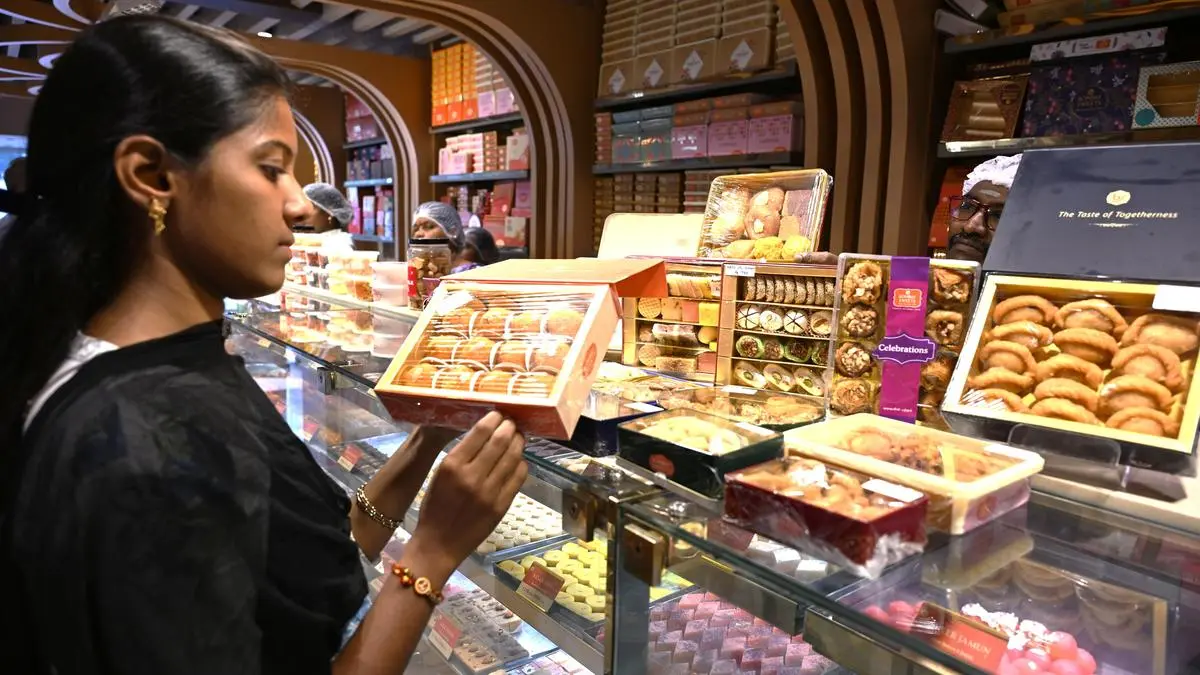
Brightly coloured boxes of sweets are piling up in shops, offices and homes across India, as they always do around this time. The country is preparing to celebrate Diwali and exchanging treats is one of the defining rituals.
This year, it’s going to be an expensive one.
Sugar, the foundation of almost every Indian sweet, costs almost 30% more in September than it did a year earlier. Refined cooking oil used for frying rose about 15%, raisins 10% and nuts 9% — all of them running far ahead of the country’s overall inflation rate.
The cost pressures are filtering through to the sweet shops of central New Delhi as they prepare for a rush of business before Sunday, when most people will celebrate the festival. Glass counters are packed with mithai, the catch-all term for confections made from milk, nuts, flour, sugar and ghee.
The merchandise is mouth-watering. The price tags, not so much.
Varjesh Aggarwall, managing partner at Bengali Sweet House — a Delhi shop founded back in 1937 when India was still under British rule — said the rising cost of ingredients has forced him to push prices up, though he’s kept the hike below 10%. “All the commodity prices have increased and obviously impacted us,” the 58-year-old said.
Nationwide, sweet-inflation is running at more than 9%, according to official data. That’s something of an emergency in sweet-loving India — the world’s biggest consumer of sugar, as well as the No. 2 producer — and politicians have already intervened.
The government in August allowed mills and refiners to import raw sugar duty-free, after domestic prices hit records. Authorities also imposed limits on how much sugar dealers and bulk buyers can hold, urged mills to restrain prices during the festival season, and barred sugar from being diverted to ethanol production.
Those measures had some impact. But they’ve been offset by an El Niño-linked rainfall deficit that threatens sugar-cane production in the 2026-27 season.
Shopping Season
For sweetmakers, it all adds up to a difficult Diwali calculation: pass those costs on during their most important sales season, or sacrifice margins.
“We have absorbed all the losses,” said Vijay Shankar Agarwal, 43, a manager at House of Kaleva in central Delhi where he’s worked for 25 years. Prices have risen only about 3%, he said.
At shops across the capital, customers have noticed something’s different this year.
Poosa Ramesh, a 25-year-old business analyst, was at Nathu’s in Bengali Market with her mother, looking for sweets to give friends and relatives. “Prices have increased 20-30 rupees per box in the last one week,” she said.
Some buyers suspect they’re getting less for their money. Tarun Johri, a 59-year-old lawyer who bought 40 boxes of dried fruit from another store for Diwali gifting, said prices had risen while quantities in some packages had shrunk.
For the sweet shops and their customers, things could get worse before they get better.
Economists surveyed by Bloomberg News expect headline inflation of 6.1% in the last quarter of this year, up from September’s 5.5%. The numbers for groceries will likely be higher. Aditi Nayar, chief economist at credit rating firm ICRA Ltd., expects “broad-based” food inflation of above 8%.
All of this suggests the price squeeze won’t go away as India’s festival season extends deeper into the fall. Sugar demand is typically high all the way from August through January.
And for the families taking sweet-boxes to friends and relatives this Diwali, they’re already getting a taste of inflation.
Source: BusinessLine Markets
Disclaimer: This article is for general information and does not constitute investment, tax or legal advice. Markets and rates change; please verify with official sources or a qualified professional before you act.