From 250,000-unit ambitions to a production wind-down: What went wrong with Elon Musk's Cybertruck?
Tesla will wind down Cybertruck production at its Texas factory by mid-2027 to make room for its Cybercab robotaxi. The pickup struggled to meet sales expectations despite Musk's ambitious projection.
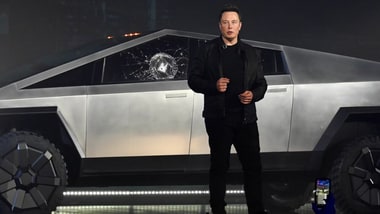
Tesla chief executive Elon Musk has announced plans to wind down production of the electric vehicle maker's Cybertruck at its Texas factory around the middle of next year, bringing an end to a programme that fell significantly short of its ambitious sales projections. Musk said the move would free up manufacturing capacity at the company's Texas Gigafactory for the Cybercab, Tesla's two-seat autonomous vehicle. He made the announcement in a post on X on Friday, without clarifying whether Cybertruck production would continue at another facility.
Responding to a user who described the development as the end of an era, Musk said the Cybertruck fleet would remain on the roads for a long time. Unveiled in 2019, the Cybertruck featured an unconventional angular design and was expected to achieve annual sales of 250,000 units. However, demand remained far below those projections.
Tesla does not disclose sales figures separately for individual models, but Cox Automotive estimated that Cybertruck sales in the US fell to 20,237 units in 2025, down 48% from 38,965 in 2024, CNBC reported. Cybertruck production to make way for Tesla's CybercabThe Cybertruck is manufactured exclusively at Tesla's Texas facility, where the company also produces the Model Y and Cybercab. Musk said winding down pickup production would allow the company to use the capacity for the autonomous vehicle.
Tesla has increasingly focused on artificial intelligence, robotics and autonomous driving as it looks to expand beyond its traditional electric vehicle business. The Cybercab is central to that strategy. The two-seat vehicle does not have a steering wheel or foot pedals.
Tesla began manufacturing Cybercabs at its Austin factory this year and has introduced the vehicle through its robotaxi service. However, US auto-safety regulators are examining the process and technical information the company used to certify that the vehicles meet federal safety standards, Bloomberg reported. The Cybertruck phase-out also follows Tesla's decision earlier this year to discontinue its higher-priced Model S and Model X vehicles.
The Model Y SUV and Model 3 sedan account for the bulk of the company's sales. Tesla currently produces around 20,000 units annually, accounting for roughly 1% of its total vehicle volume, compared with the Texas factory's capacity to manufacture more than 125,000 pickups a year, Bloomberg reported. Cybertruck struggled to meet sales expectationsMusk had projected that Cybertruck sales could eventually reach 250,000 units annually, depending on demand.
When unveiling the vehicle in 2019, he argued that the pickup segment had seen little design innovation over the preceding century and presented Tesla's offering as a radical alternative. Despite attracting considerable attention, the vehicle failed to secure mass-market demand. Its distinctive appearance divided opinion, while specifications, quality concerns and production problems added to the challenges.
The 2024 Cybertruck was subject to 11 voluntary recalls, according to the National Highway Traffic Safety Administration's website. The issues included a potentially trapped accelerator pedal that could cause unintended acceleration, software defects and an inverter fault that could lead to a sudden loss of drive power, CNBC reported. The vehicle also received substantial purchases from Musk's other businesses.
SpaceX spent $131 million buying Cybertrucks at Tesla's suggested retail price last year, according to a company financial filing cited by CNBC. Bloomberg had earlier reported that purchases by Musk's other companies helped support Cybertruck sales.
Source: Mint Companies
Disclaimer: This article is for general information and does not constitute investment, tax or legal advice. Markets and rates change; please verify with official sources or a qualified professional before you act.