From warehouses to last-mile delivery: How India’s logistics companies are handling festive e-commerce rush
As festive online shopping gathers pace, India’s logistics companies are expanding warehouse capacity, hiring workers and using AI to manage deliveries. Rising order volumes, bulkier parcels and demand from smaller towns are testing their ability to keep shipments moving and meet delivery promises.
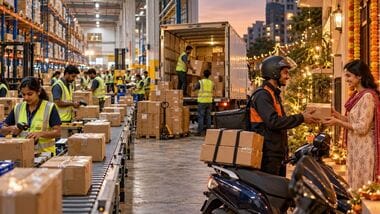
Every festive season, millions of online shoppers expect their orders to arrive within days. Behind those delivery promises is a complex logistics network comprising warehouses, transport hubs, truck fleets and last-mile delivery workers that keeps goods moving across the country. As festive shopping gathers pace, logistics companies face growing pressure to process higher order volumes while meeting expectations for faster deliveries.
According to Datum Intelligence’s September 2026 projections, online festive sales are expected to reach ₹1.50–1.55 trillion, marking a 25–29% increase from roughly ₹1.2 trillion in 2025. The surge is expected to test the capacity of brands, e-commerce marketplaces, warehousing networks and logistics providers as they gear up for one of the busiest shopping periods of the year. The online shopping surge is no longer limited to metro cities.
E-commerce firms are witnessing growing demand in Tier-2 and Tier-3 towns. For logistics companies, this creates both an opportunity and a challenge. Rising volumes offer growth potential but can also expose operational weaknesses that are less visible during quieter periods.
Challenges facing logistics companies1. Rising order volumes bring greater complexityAccording to a September 2026 report by Datum Intelligence, festive e-commerce order volumes are expected to increase from roughly 760 million in 2025 to 966 million in 2026, a 27.1% increase. Average order values are expected to decline from ₹1,578 to ₹1,554, suggesting more shipments to handle even as the average purchase becomes smaller.
This makes operational efficiency, automated order management and intelligent courier allocation increasingly important. Promotions, flash sales and festive campaigns can concentrate orders within short periods, putting sudden pressure on transportation, warehousing and sorting networks. “Festive peak changes the shape of a logistics network.
Demand moves at the pincode level, carrier capacity tightens unevenly, and on the busiest days volumes run at three times normal. Plans built on last quarter’s averages break within hours,” said Soham Chokshi, co-founder and CEO at Shipsy.2. Last-mile delivery becomes harder as demand spreadsExpansion into smaller cities brings more delivery destinations and local access challenges, alongside expectations for shorter delivery windows and reliable tracking.
A Financial Express report on 8 September described how companies are adapting: DTDC is using waterways to reach some Kerala communities with limited road access, while Delhivery is using mapping technology to improve address accuracy and routing. Krishna Gupta, CEO, ShipMaxx360, said, “With Tier 3 towns accounting for 42% of overall orders during the first week of the 2026 festive sales, according to Unicommerce, logistics providers must also expand their reach beyond metropolitan markets.
This calls for flexible delivery networks, better shipment visibility and the ability to serve locations with varying infrastructure and delivery requirements.”3. Bulkier parcels put pressure on warehouse and transport capacityParcel size and weight matter alongside order numbers. According to an ET Supply Chain report, DTDC expected festive shipment weight to grow faster than shipment volumes.
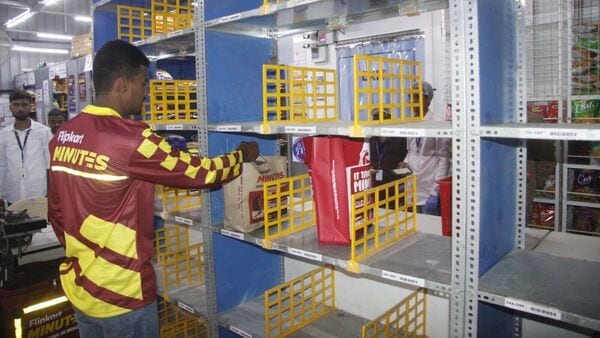
Shadowfax also identified footwear, home and kitchen products, and luggage as categories creating storage pressure. This adds another planning challenge: companies need sufficient space and handling capacity for the products being ordered. How logistics companies are handling festive rushTo manage the seasonal spike, logistics companies are expanding temporary hiring, adding storage space and reworking operations.
However, expanding the workforce comes at a cost. According to the ET Supply Chain report, DTDC said seasonal wages and incentives had risen 18–20% year-on-year in metros and 10–12% in non-metro markets. The company attributed the increase to competition for workers during the holiday period, adding that automation and productivity improvements were helping it manage demand without expanding its workforce at the same pace.
Gupta emphasized the importance of planning. “Managing the festive rush requires logistics companies to prepare well before order volumes begin to peak. Businesses are strengthening inventory planning, positioning products closer to high-demand markets and ensuring warehouse operations are equipped to handle sudden spikes in orders.
Equally important is the ability to scale shipping capacity, work with multiple courier partners and optimize delivery routes as demand shifts across regions,” he said. Alongside planning, technology is helping companies respond to disruptions as they occur. “AI is making a practical difference across the chain.
In warehouses and transport, it helps place inventory close to where demand will show up and assigns loads to carriers based on their live capacity and recent performance. In the last mile, orders get rebatched and reassigned automatically when riders are delayed at pickup, and routes and delivery promises adjust when heavy rain hits a city,” Chokshi said. “The objective is not simply to deliver more parcels at greater speed, but to build an agile logistics ecosystem that can absorb demand fluctuations without compromising service quality,” Gupta said.
Source: Mint Companies
Disclaimer: This article is for general information and does not constitute investment, tax or legal advice. Markets and rates change; please verify with official sources or a qualified professional before you act.