Govt targets 505 mt steel demand by 2047, plans 604 mt capacity
India targets 505 mt finished steel by 2047 with 604 mt capacity under National Steel Policy, boosting self-reliance and cleaner production.
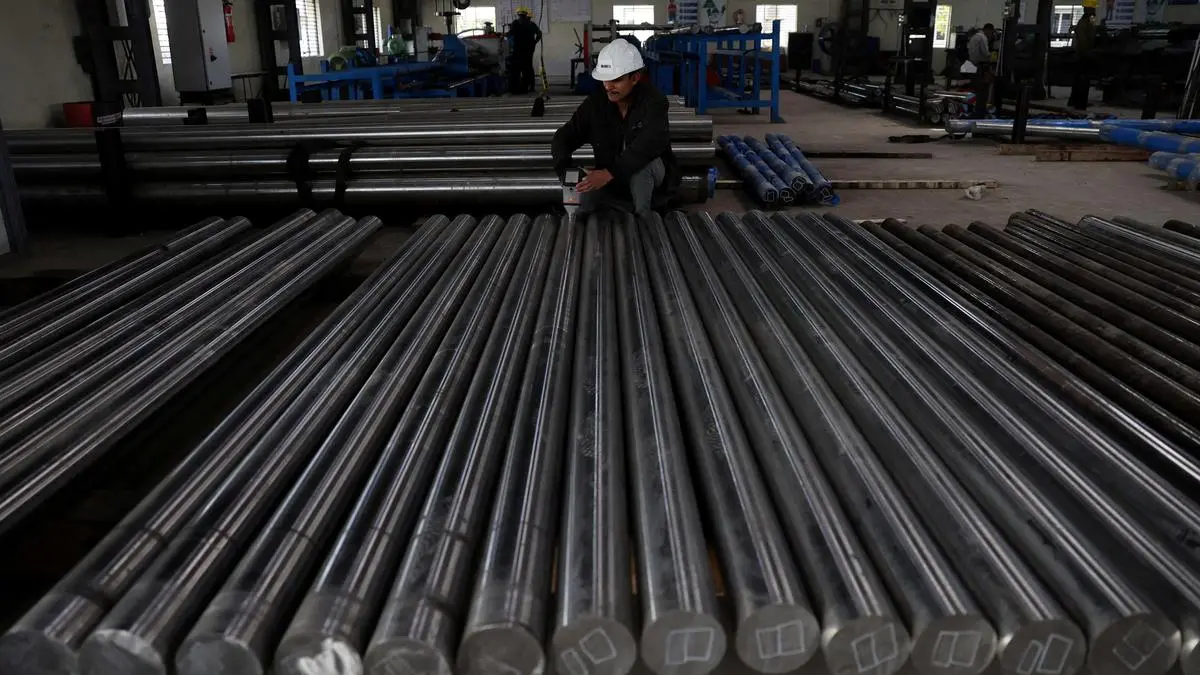
The government has projected India’s finished steel demand to reach 505 million tonnes by 2047, requiring crude steel capacity of 604 mt, under its National Steel Policy — Vision 2047, which aims to reduce raw material import dependence and accelerate the sector’s transition to cleaner production.
The domestic crude steel production increased from about 89 mt in 2014-15 to 170 mt in 2025-26, while the finished steel consumption rose from 77 mt to 164 mt. The country’s share of global crude steel production grew from 5.2 per cent in 2014 to about 8.9 per cent in 2025, with installed capacity reaching 220 million tonnes per annum (MTPA).
The policy projects per capita steel consumption of 302 kg and steel exports of 45 mt by 2047. Construction and infrastructure account for about 67 per cent of domestic steel consumption, with automobiles, engineering goods, appliances and packaging contributing another 28 per cent.
Reducing dependence on imported raw materials is a key priority, as these account for 65-70 per cent of steelmaking costs. While India is largely self-sufficient in iron ore, it imports nearly 92 per cent of its coking coal requirement.
Domestic expansion
The policy proposes expanding domestic mining and coal washeries, acquiring overseas assets, securing long-term supply arrangements and using artificial intelligence to optimise coal blends. It also focuses on manganese, limestone and other critical inputs.
The secondary steel sector, comprising around 2,550 units and nearly 47 per cent of crude steel production capacity, will receive support for technology upgrades, raw material access, skills and safety.
The steel sector contributes 10-12 per cent of India’s carbon dioxide emissions, with average emission intensity of 2.54 tonnes per tonne of crude steel, against the global average of 1.92 tonnes. The policy envisages a phased transition towards net zero by 2070 through energy efficiency, renewable power, greater scrap utilisation and hydrogen.
It also seeks to strengthen domestic production of specialty and stainless steel, develop scrap-processing infrastructure and promote indigenous technology. AI-based import monitoring and trade-remedial measures will help curb substandard steel imports.
The policy proposes a Steel Industry Safety Council, periodic skill-gap assessments and upgraded training institutions to improve workforce capabilities and industrial safety.
Source: BusinessLine Economy, BusinessLine Economy
Disclaimer: This article is for general information and does not constitute investment, tax or legal advice. Markets and rates change; please verify with official sources or a qualified professional before you act.