The food vs fuel debate is being asked the wrong way
Rethinking food versus fuel: India can achieve dual food security and energy via regenerative farming, smart policies, and farmer-centric biorefineries.
I have spent decades working at the intersection of agriculture, chemistry, and energy. In that time, I have come to believe that one cannot be transactional when thinking strategically, especially when it is about the climate and the planet. My thinking mirrors my strong belief in, “The earth is my mother and I am her son” (माता भूमिः पुत्रोऽहं पृथिव्याः). This relationship of duty, affection, and stewardship rather than ownership, guides every choice we make for our common future.
India achieved 20 per cent ethanol blending in 2025, five years ahead of the National Policy on Biofuels target. However, as we advance toward E85 and E100, the “food versus fuel” debate has resurfaced. Are we taking food off plates to fill fuel tanks? Are we draining aquifers for automobiles? These questions deserve serious answers, but the premise must be examined first: it assumes land, water, and crops exist in a fixed, zero-sum system where ethanol inherently competes with food. Whether that assumption holds, depends entirely on system design.
India is not a food-scarce country redirecting harvests toward fuel. The USDA Grain and Feed Annual Report (April 2026) notes India’s government-held rice stocks stood at 73.9 million tonnes (mt) in March 2026, which is more than five times the prescribed buffer norm of 21 mt. Millions of Indian farmers rely on the land; biofuel programmes allow them to participate gainfully in national growth.
Solution is not in abandoning
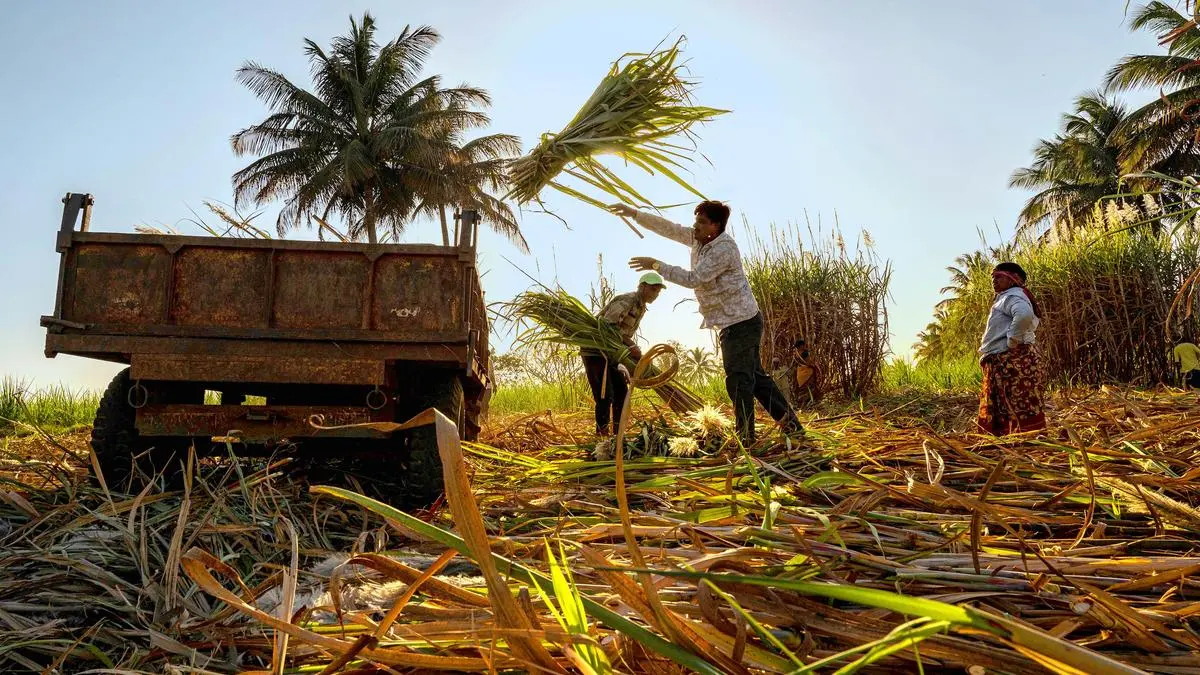
The same principle applies to water. Sugarcane grown traditionally under flood irrigation on depleted soil is water-intensive. However, the solution is not abandoning sugarcane, but transforming its cultivation. ICAR research demonstrates that drip irrigation dramatically reduces water consumption while increasing yields. Yet adoption varies widely: drip irrigation covers 42 per cent of sugarcane farmland in Maharashtra, compared to barely 1.5 per cent in Uttar Pradesh. The issue was never the crop itself, but cultivating it without blending traditional wisdom and modern science.
A single teaspoon of healthy soil contains up to one billion bacteria, which is more living organisms than people on Earth. Extraction without replenishment causes this living system to collapse, and rainfall alone cannot restore chemically depleted land. Collaborative research with agricultural scientists demonstrates that improving soil health raises productivity while boosting water-use efficiency. This additional agricultural capacity can fulfill both food security and energy needs. Modern agriculture including Ethanol can be extractive but it also can be regenerative. While drawing from the land, return vital value back to it, manifold.
Grain, water, land: every argument leads back to the farmer. India is rich in the sun, the soil, and small farmers. Food definitely comes first and fuel second. Fulfilling in that order, the farmers earn from both on the same land, gain improved financial stability required to reinvest in soil health.
Saving forex
Ethanol has introduced essential stability to the agricultural sector, establishing a parallel demand stream that absorbs surplus production and secures a dependable income floor. Between 2014 and May 2026, the ethanol blending programme delivered over ₹1.60 lakh crore directly to farmers while saving India more than ₹1.90 lakh crore in foreign exchange.
The central question before India is not whether to produce ethanol, but how to produce it: using the right feedstocks, on regeneratively farmed land, and through systems that treat the farmer as a true partner rather than a supplier. The choice was never food or fuel. It has always been whether we possess the imagination, science, and commitment to design a system delivering both. Policy must enable this shift, and industry must deliver it at scale to ensure a sustainable, inclusive world for future generations. That vital work is already underway.
The author is Chairman & Managing Director of Godavari Biorefineries Limited
Source: BusinessLine Economy
Disclaimer: This article is for general information and does not constitute investment, tax or legal advice. Markets and rates change; please verify with official sources or a qualified professional before you act.