
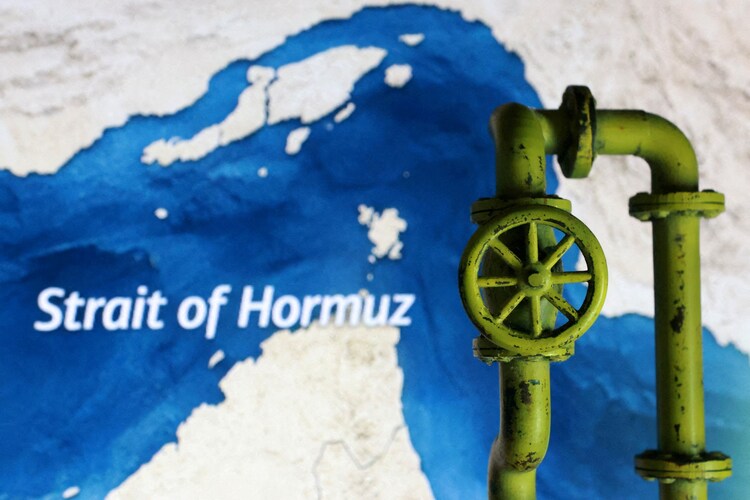
More than a month into the West Asia war, the disruption to global oil flows has turned into a sustained shock, with energy infrastructure across the Gulf repeatedly targeted and one of the world’s most critical supply routes under pressure.
The . Tanker routes have shifted, and costs across the supply chain have risen.
And yet, even as prices have risen, and emergency reserves have been used, the response still feels geared towards a short-term shock, not a crisis that could last longer.
Since the war began, Brent Crude has surged from about $60–70 a , marking a rise of roughly 50–60%, with prices still holding above $110.
Experts tracking the conflict told IndiaToday.in the situation is worsening with each passing day of the war, and could deteriorate further if there is no resolution soon.
Supply has been disrupted, albeit not to the point of breakdown. Oil continues to move, even if less efficiently and at a higher cost. That gap between disruption and perception may be where the real risk lies.
“Markets react to geopolitical shocks but tend to assume short-lived disruptions,” said Manoranjan Sharma, Chief Economist at Informerics Ratings. That tendency, often described as geopolitical fatigue, leads to an underpricing of risk, particularly when disruptions involve critical chokepoints.
Even limited escalation, he noted, can trigger disproportionate supply shocks, amplified by shipping constraints and broader financial spillovers.
For now, oil is still trading in what appears to be a risk-driven phase. Prices move with headlines, with shifts in rhetoric and expectations, rather than fully reflecting physical shortages.
But the structure underneath is changing. “The oil market is shifting from a risk-premium phase to a supply-sensitive environment,” Sharma said.
Tight spare capacity, underinvestment and geopolitical fragmentation have reduced the system’s ability to absorb shocks. In such a setting, even relatively contained disruptions can .
There are already signs of that shift, though they are not evenly visible. In parts of Asia, where dependence on Gulf crude is highest, supply is tightening. Cargoes are harder to secure, and crude that once traded at a discount is now being bid up.
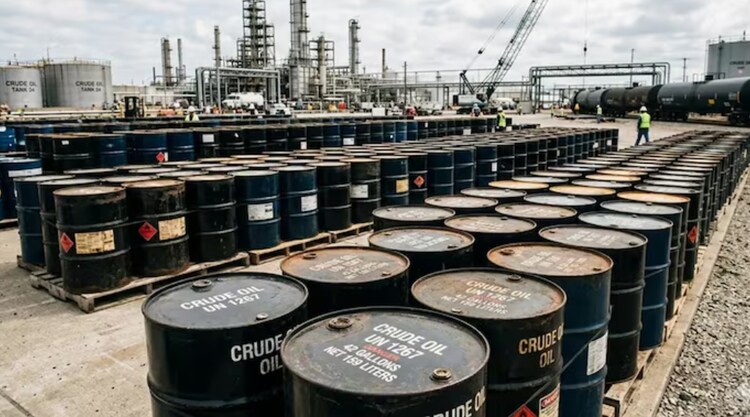
“We estimate that currently there is physical deficit of 7 million barrels per day, which if sustained, would materially tighten the global balance,” said Dhaval Popat, Energy Analyst at Choice Institutional Equities.
That deficit has not yet translated into a uniform global shortage. But it is already reshaping trade flows in exposed markets.
Popat also noted that prices are still not fully capturing this. “Markets are currently reacting to news flow, while the physical market is beginning to signal a deeper supply imbalance that has not yet been fully priced.”
Part of the reason this does not feel like a crisis is the presence of buffers. The International Energy Agency’s is the largest coordinated drawdown in its history.
On the surface, it signals control. But the numbers tell a more limited story.
According to Dr Jaydeep Mukherjee, Professor of Economics at Great Lakes Institute of Management, the release represents only about a third of total strategic stockpiles and would cover just a few days of global consumption.
Even more critically, it would offset only a fraction of the supply disruption linked to Hormuz. At peak capacity, the United States can release about 1.4 million barrels per day, roughly 15% of the supply affected by the closure.
“The market considers these measures insufficient,” Mukherjee said, pointing to the fact that prices continued to rise even after the announcement.
In effect, the reserves are buying time, not restoring balance.
The shift from disruption to crisis rarely happens in a single moment. It builds through a pattern.
Supply disruptions persist rather than ease. Inventories begin to fall. The futures market signals tight near-term availability. The cost of moving oil rises as shipping routes are disrupted and insurance premiums increase.
Sharma exactly highlighted this sequence. Several of these conditions are already visible. Shipping costs have risen. Insurance premiums have climbed. Supply chains are adjusting to delays and rerouting.
And the effects do not stop with oil.
Mukherjee highlighted the broader exposure, saying that the Gulf accounts for a significant share of global fertiliser exports, including urea and ammonia. Disruptions there feed directly into food prices, creating a second wave of inflation.
That process has already begun. Fuel prices have risen across multiple countries, and higher energy and freight costs are pushing up food prices globally.
The key variable now is time. Oil markets can absorb short disruptions.
They struggle with prolonged ones. If the conflict had eased quickly, the system would likely have stabilised. Instead, it has stretched beyond a month with no clear resolution.
Mukherjee notes that even after a ceasefire, recovery will not be immediate.
, disruptions to logistics and production shutdowns can take months to reverse. That delay extends the impact of the shock well beyond the conflict itself.
If oil prices remain elevated, the .
“Oil prices may stay elevated if tensions persist and supply remains inelastic,” Sharma said.
The result is a difficult combination of slower growth and higher inflation. The risk is not just inflation or slowdown in isolation, but both together.
A prolonged oil shock could push parts of the global economy towards a stagflationary environment, limiting the ability of policymakers to respond.
Mukherjee draws a longer comparison. The was triggered by a smaller supply disruption, yet it had a severe economic impact. Today’s disruption, in proportional terms, could be larger, even if prices have not yet reacted as dramatically.
The difference is where the impact will be felt. About 80 percent of the oil moving through Hormuz is destined for Asia, making the region far more exposed.
At this stage, the global oil market is still functioning, though under strain. Supply is severely disrupted but not yet broken.
Prices are elevated, but haven’t reached extreme levels. Emergency reserves are cushioning part of the shock.
That is what makes this difficult to read.
There is no clear break yet. Oil continues to move, and the system still appears to be holding. That creates the impression that the disruption is manageable.
But the war is still ongoing. The Strait of Hormuz remains mostly shut. And the physical market is already beginning to show signs of imbalance.
As per what experts told IndiaToday.in, the risks may still be underestimated, with supply tightening beneath the surface and the impact likely to build if the disruption persists.