
Bengaluru’s Outer Ring Road (ORR) micro-markets, particularly Bellandur, Panathur and Sarjapur Road, are drawing scrutiny after a tenant said on Reddit that he paid ₹35,000 for a 1BHK ‘just to avoid a three-hour ordeal at Silk Board.’ The post described this as the ‘Bellandur paradox’, paying ₹32,000– ₹35,000 for a compact home simply to stay close to work.
Several users likened it to a ‘traffic tax’, a premium paid to live near offices along the ORR tech corridor. With peak-hour congestion at Silk Board Junction often making commute time unpredictable, proximity has effectively become a pricing factor in rental decisions. The question now being debated: is the 15-minute commute Bengaluru’s ultimate status symbol?
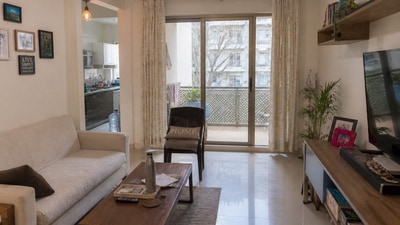
“Is it just me, or has the market around Bellandur/Panathur completely lost its mind? I’m currently looking for a place near RMZ Ecoworld, and the “inflated rent tax” is real. I’m seeing fully furnished 1BHKs in Panathur (looking at you, Lake Liva and similar projects) going for ₹32k– ₹35k. For context, you can get a massive, quiet 2BHK in Banashankari for ₹25k. The Catch? That 2BHK comes with a complimentary 1.5-hour one-way commute on an AC bus (on a good day),” the tenant said.
Also Read:
The ‘traffic tax’ demands premium rentals
Redditors also mentioned living next to workplaces, similar to paying a ‘traffic tax,’ a premium paid to live closer to workplaces along the ORR tech corridor. With peak-hour congestion around Silk Board Junction often stretching commutes unpredictably, time has effectively become a pricing factor in rental decisions, they said.
“The Traffic Tax: The Bellandur/Sarjapur/ORR traffic is so bad that ‘minutes’ have become the new currency. People are willing to pay an extra ₹10k a month just to claw back 2 hours of their life every day,” the post said.
Despite the premium, tenants argue that infrastructure has not kept pace. Issues such as tanker-dependent water supply, hard water, and bottlenecks like the Panathur railway underpass continue to affect daily life.
“Are we reaching a breaking point where the hybrid 3-day office mandate makes it cheaper to just live in a better neighbourhood (like HSR or Banashankari) and just accept the bus life? Or is the 15-minute commute still the ultimate status symbol in Bangalore?” the Redditor said.
Lifestyle trade-off: Commute versus liveability
Redditors also pointed out a divide between those prioritising shorter commutes and those opting for better living conditions elsewhere in the city.
“For context, you can get a massive, quiet 2BHK in Banashankari for ₹25k,” the post noted, contrasting it with high in ORR areas. However, the trade-off is significant, a complimentary 1.5-hour one-way commute on an AC bus, it said.
Several users also pointed out the infrastructure gaps along Sarjapur Road. “Dust everywhere, missing footpaths, long-distance parking, choke-point U-turns… during heavy rains, it becomes even worse,” one of the Redditors wrote, adding that areas like Banashankari offer a far more reasonable and more beautiful place to live.
Redditors also said rental experiences vary widely across micro-markets, with some finding relatively affordable, spacious units despite the broader surge in prices. “I am having a very good spacious 1BHK for ₹17k… nicely ventilated,” another user shared from Panathur, contrasting it with smaller, higher-priced units in prime HSR Layout close to ORR. “Room area bohot kam hai and no sunlight, no ventilation… ‘itna hi milega’,” the user recounted from a broker interaction.
Also Read:
Outer Ring Road: Once a bypass, now a bottleneck
Stretching over 60 km and connecting key employment clusters like Marathahalli, Bellandur, and Sarjapur Road, the ORR was originally designed to divert inter-city and heavy vehicular traffic away from the city’s core. However, over the past decade, the corridor has evolved into Bengaluru’s prime commercial belt, housing several office spaces.
Urban experts argue that the corridor’s congestion is due to planning oversight. “The ORR was never intended to handle this density of office and residential development. The road’s design capacity was quickly breached when large-scale commercial projects were sanctioned without proportional upgrades to public transport or civic infrastructure,” environmentalist Sandeep Anirudhan said.
“If we look at the original ORR, it was part of the 1985 master plan and designed as a bypass, completely outside the limits,” Anirudhan explained. “Everything on the other side of the ORR was designated as a green belt; no development was supposed to take place there.”
Urban mobility expert Sathya Sankaran, also known as the Bicycle Mayor of Bengaluru, stated that the city’s ORR crisis is a direct consequence of fragmented urban planning and a lack of multimodal transportation options.
He emphasised that Bengaluru’s road infrastructure needs a fundamental rethink. “The available bandwidth on ORR needs to be re-aligned,” he said. “This stretch has major residential and commercial developments on both sides, yet there are hardly any parallel roads to divert traffic. Everything funnels into one corridor.”
(Disclaimer: This report is based on user-generated content from social media. HT.com has not independently verified the claims and does not endorse them)