
“Picture abhi baaki hai, mere dost.” (“There’s still more to the story, my friend.”)
That famous dialogue by Shah Rukh Khan from Om Shanti Om kept playing in my mind as I scrolled through yet another viral headline claiming that Indians may need Rs 40 crore to retire comfortably by 60.
Rs 40 crore.
Just reading that number felt exhausting.
Of late, financial conversations in India have become dominated by this one headline-grabbing figure, popularised by The logic behind it sounds convincing enough, i.e., urban inflation is rising, people are living longer, and the returns we expect from investments often look very different after inflation quietly eats into them.
But honestly, I found myself confused even slightly intimidated.
Do we really need Rs 40 crore to retire?
And more importantly, what happens if someone doesn’t have it?
Because for most middle-class Indians, retirement was never imagined as a multi-crore mathematical puzzle. It was simpler. You worked hard, bought a home, educated your children, built some savings, and hoped life after 60 would be peaceful.
But somewhere between , and viral finance podcasts, retirement started sounding less like “sukoon” (peace of mind) and more like survival.
That’s when I realised I needed to step away from viral numbers and hear from real people instead, i.e., people from different professions, income groups, cities, and lifestyles—to understand what retirement actually means beyond scary numbers and social media panic.
And what I discovered was comforting.
There is no single retirement number.
There is only your retirement number.
The most grounded perspective came from Manvendra Pratap Singh, Assistant Professor at the School of Management, NIT Rourkela.
Unlike the flashy Rs 40 crore headline, his , thoughtful, and deeply Indian.
His target retirement corpus by age 65 is around Rs 18 crore. That includes everything, i.e., children’s higher education, healthcare, lifestyle needs, and leisure.
But what stayed with me wasn’t the number. It was one Hindi line he said while explaining his philosophy:
“Main ‘chaadar dekhkar paon phailana’ mein vishwas rakhta hu.” (I believe in spending according to what I can afford.)
In a world obsessed with aggressive wealth targets, that sentence felt oddly reassuring.
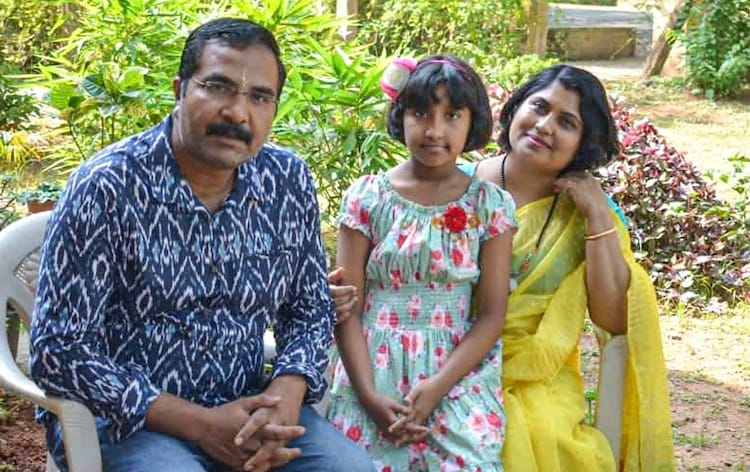
He told me he allocates nearly 75% of his planned corpus towards essentials like healthcare and living expenses, while the remaining 25% is reserved for travel and leisure.
And honestly, his retirement vision sounded beautiful.
“Retirement is not just slowing down,” he said. “It’s about enjoying a second innings with like-minded people, travelling, and making the most of that phase.”
I smiled when he joked that being married into a Bengali family naturally means “good food and travel are a way of life.”
That sounded less like retirement planning and more like life planning.
Then I spoke to Kumar Ayashkanta, Global Treasurer at EY GDS. Unlike many others, he doesn’t even plan to work till 60.
His target? Retirement at 52 with a corpus of Rs 12 crore.
What fascinated me was how methodically he had calculated it.
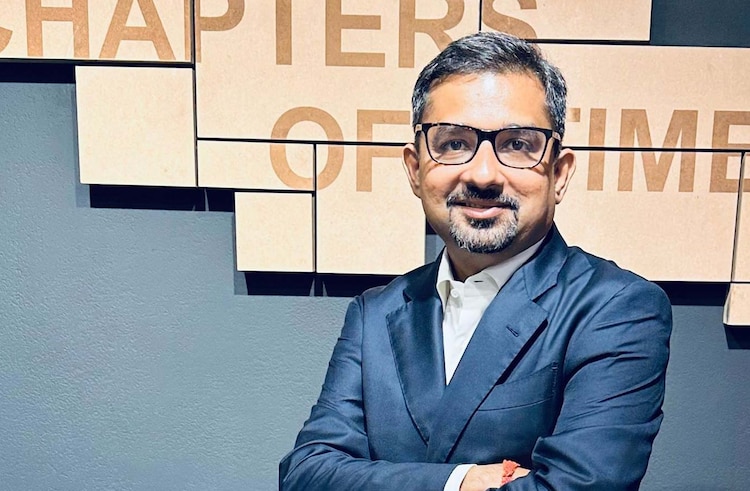
At present, his family spends nearly Rs 2.5 lakh a month. Factoring in 5% inflation, he estimates that this could rise to Rs 4.5 lakh monthly in the next 12 years.
“To sustain that lifestyle till age 90,” he explained, “I would need roughly Rs 12 crore.”
But he quickly added something important: “There is no universal figure for an ideal retirement corpus.”
That line stayed with me because it cut through all the noise.
He also made another interesting observation, i.e., someone with Rs 1 crore may live peacefully, while another person with Rs 50 crore may still feel financially insecure because of lifestyle inflation.
And that, perhaps, is the biggest truth of retirement planning.
A Bengaluru-based woman working in senior management at a global financial services firm, who preferred to remain unnamed, had a completely different perspective.
“There is no target,” she told.
Instead of obsessing over one giant number, she simply saves 30% of her salary consistently while increasing investments every year.
Her EPF (Employees Provident Fund) and contributions run separately in the background.
What I found interesting was her calm confidence.
She in small-cap and mid-cap funds, gradually shifting towards multicap and flexi-asset funds as responsibilities evolved.
Today, her broad goal is around Rs 10 crore, with no loans and separate investments planned for her daughter.
But unlike viral retirement discussions online, her approach felt less anxious and more disciplined.
“I prefer equity mutual funds because they are regulated, transparent, and hassle-free,” she said.
And perhaps that’s what long-term investing really needs—not excitement, just consistency.
Then came perhaps the most relatable answer of all. Pramod Maloo, entrepreneur and founder of Kreative Machinez & KMX, laughed when I asked about retirement.
“Honestly, I don’t think I want to retire in the truest sense of the word,” he said.
Instead, he dreams of slowing down. Waking up at 10. Drinking coffee peacefully. Going for evening walks. No packed schedules. No endless meetings.
Listening to him, I realised how differently entrepreneurs view retirement. For him, retirement isn’t about stopping work. It’s about finally owning his time.
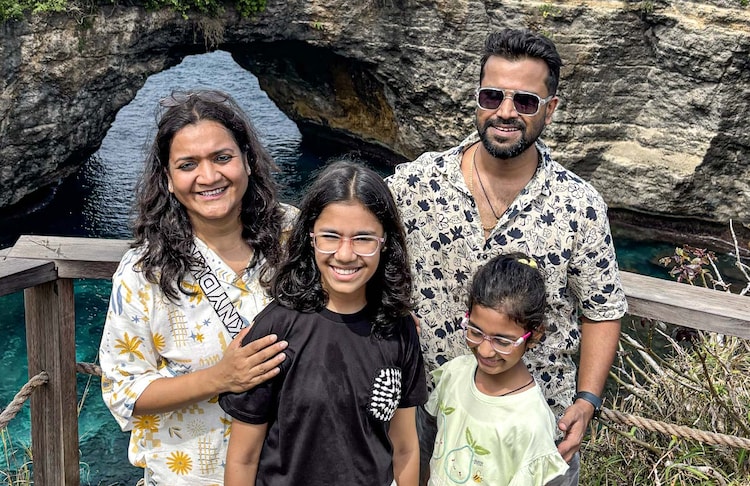
Financially, he expects his current SIPs (Systematic Investment Plans), equity investments, and other assets to eventually create a corpus north of Rs 30 crore.
But even while discussing money, his focus kept returning to freedom.
Not wealth.
Freedom.
For Pune-based finance professional Mayank Tiwari, part of a DINK (Double Income, No Kids) couple, retirement planning feels far more balanced.
He believes a retirement corpus of around Rs 4–5 crore would be comfortable, backed by investments across equity, debt, real estate, and gold.
His ideal retirement corpus? Around Rs 4–5 crore. His portfolio is diversified across equity, debt, real estate, and gold.
But what stood out was his definition of retirement itself, i.e., “Financial independence, healthcare security, and enough passive income to live without stress.”
No yachts. No billionaire fantasies.
Just stability.
And honestly, I suspect most Indians relate far more to Mayank’s version of retirement than viral Rs 40 crore calculations.
Anand Sharma, Vice President at Deutsche Bank in Pune, brought an entirely different perspective to the retirement conversation.
“While everyone talks about financial stability,” he said, “people often ignore stable health.”
He wasn’t wrong.
We spend decades planning money for retirement but often forget to prepare our bodies for it. His retirement vision includes better food, better sleep, exercise, and staying mentally active.
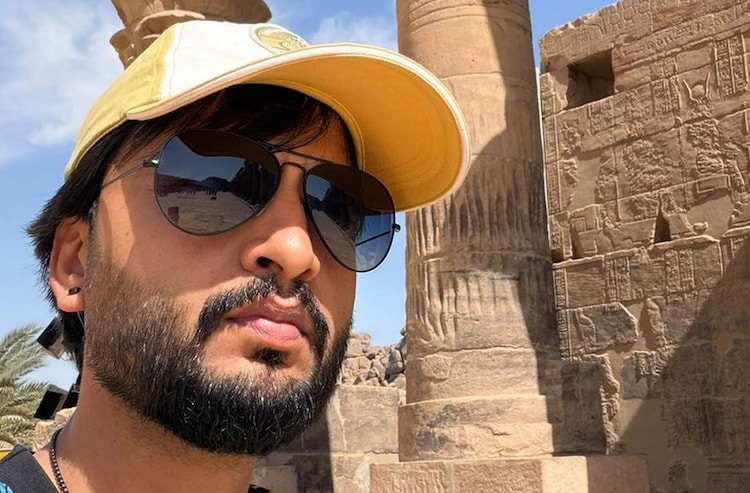
Financially, he estimates needing around Rs 5–7 crore. But emotionally, his dream retirement involves either running a small cafe or creating a creative space for artists and musicians.
It sounded less like an excel sheet and more like a meaningful life.
That is when I spoke to Abhishek Kumar, a Sebi-registered investment adviser (RIA) and founder of Sahaj Money, about the now-viral Rs 40 crore retirement figure popularised by Sandeep Jethwani, and he perhaps summed up the entire debate in a single sentence.
“Rs 40 crore isn’t a wrong number but it’s just a wrong question.”
According to him, that figure works only under very specific assumptions, i.e., a high-spending metro lifestyle, large monthly expenses, and maintaining the exact same lifestyle for 30 years after retirement.
“For most salaried Indians,” he explained, “the realistic number is somewhere between Rs 5 crore and Rs 15 crore.”
And then he said something every young investor probably needs to hear:
“The danger of these viral targets is that they convince people the goal is impossible, so they delay starting.”
That line hit hard.
Because maybe the biggest retirement risk isn’t inflation.
Maybe it’s procrastination.
Tax expert and CA Nishant Shankar brought some much-needed realism to the debate around oversized retirement targets.
“Yes, Rs 40 crore can make sense, but only under high inflation assumptions and very high lifestyle expectations.”
According to him, most urban professionals would realistically need somewhere between Rs 10 crore and Rs 20 crore for a financially secure retirement.
He also pointed out something uniquely Indian that global retirement calculators often ignore—many Indians already own homes, expenses often reduce with age, family support systems still exist, and several people continue earning even after retirement.
All of this changes the math significantly.
His advice was simple and practical: start early, increase your earning capacity, build multiple income streams, and think in milestones instead of one intimidating number.
After all these conversations, one thing became clear to me.
Retirement is not a universal formula. For some, Rs 5 crore may be enough. For others, even Rs 20 crore may feel insufficient.
The real question is not: “How much money should everyone have?”
The real question is: “What kind of life do you want after 60?”
Do you want peace or luxury? A metro or a quiet town? Travel or simplicity? A second career or complete retirement?
Because somewhere between SIP calculators and social media panic, we’ve forgotten something important:
Retirement is deeply personal.
And maybe that’s why my favourite dialogue from Anand suddenly feels perfect here:
“Babumoshai, zindagi badi honi chahiye, lambi nahi.” (Life should be meaningful, not merely long.)
Perhaps retirement works the same way too. It’s not about chasing the biggest number. It’s about building a life where money quietly supports your happiness instead of constantly frightening you.
And after speaking to all these people, I realised something simple: Nobody was really planning for a number. They were planning for peace.
And your retirement number?
That’s a story only you can write.