
A resident of a Bengaluru housing society has questioned whether a Residents’ Welfare Association (RWA) can restrict vehicular movement on internal roads after the association allegedly closed several roads originally designated for vehicle access and converted them into pedestrian-only zones.
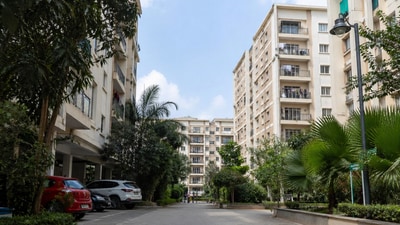
The issue surfaced after a resident said the original builder’s plan allowed vehicles to move between all towers through internal roads, making entry and exit smooth. However, after the association took control, it allegedly shut several of these roads to vehicle traffic and converted them into pedestrian-only zones.
According to the resident, the move forced occupants of some towers to take longer routes, leading to ‘5-10 minutes’ during peak hours and causing inconvenience.
“In my project, the original plan had roads for vehicles running between all the towers. It made entry and exit pretty smooth for everyone. After the association took over, they closed all these internal roads for vehicles and made them pedestrian-only. When I asked the association to reopen at least some of these roads as per the original plan, they denied and said the association has the right to close it off,” the Redditor wrote.
Also Read:
Safety vs access: Some of the residents back pedestrian-only roads
Some of the Redditors supported the association’s decision to prioritise pedestrian safety and reduce traffic inside residential campuses.
One of the users wrote, “Two thumbs up to the RWA for making most roads pedestrian-only. Yes, they can make changes to vehicle movement.”
The user further argued that while roads may be part of the approved site plan, the type of traffic permitted on those roads may not necessarily be fixed under sale agreements or registrations.
“Roads are defined by site plan, what can run on those roads is not part of the agreement/registration. You can challenge this if and only if you are not able to reach your parking area at all. If there is consensus among residents on this restriction, if you are able to reach your parking area, there is nothing you can do,” the Redditor wrote.
‘Depends on bye-laws,’ Redditors say
Others argued that an association cannot impose such traffic restrictions without due process, transparency and authority under registered bye-laws.
One resident suggested seeking formal through legal channels, saying homeowners should demand records behind such decisions.
“Send them a legal notice asking them for the basis for such a decision. Minutes of the meeting where this decision was passed. Total votes made in support of passing this rule. Specific clause in the society’s bye laws that gives them the authority to pass such rules,” the Redditor wrote.
Also Read:
Legal experts weigh in
Legal experts say apartment associations may regulate vehicle movement on internal roads for safety, traffic management and community welfare, but they cannot arbitrarily shut access routes that were part of the original usable circulation plan without due process.
Akash Bantia, an advocate, said many housing societies create time-based restrictions on certain stretches of internal roads, especially during evening hours when children use open areas for play.
“In many societies, cars are to use one portion of the campus, but there are timings. After a certain time, some vehicles may be restricted because children are playing, and residents are asked to use alternative roads,” Bantia said.
He said that reasonable regulation is generally different from a blanket closure of roads that residents were previously allowed to use.
“If a road was available earlier as part of normal movement inside the apartment complex, they cannot simply shut it down without following procedure and obtaining the support required under the bye-laws,” he said.
“If he is a tenant, he may not have the same authority to directly challenge the association as an owner. Owners have clearer standing to question such decisions before the competent authority,” he said.
(Disclaimer: This report is based on user-generated content from social media. HT.com has not independently verified the claims and does not endorse them)