
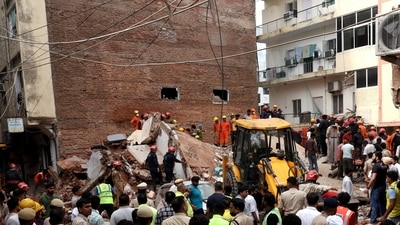
The Delhi building collapse on Sunday has once again raised questions about structural safety, unauthorised construction and the condition of ageing residential buildings in the national capital. For people living in paying guest (PG) accommodation, the incident is also a reminder that checking rent, location and amenities may not be enough before moving into a property.
According to real estate consultants, tenants should also check whether the building itself is legally approved and structurally safe. Before signing an agreement, renters should conduct a basic PG safety audit covering both structural and legal red flags. This becomes particularly important in older buildings in Mumbai and Delhi, where unauthorised additions, excessive occupancy and ageing structures can create safety risks.
Here are 7 points you need to consider for conducting PG safety audit: Structural vs Legal Red Flags
1) Unsanctioned vertical extensions
Experts said a newly constructed top floor, terrace room or mezzanine should not automatically be assumed to be legal. Tenants should compare the actual number of floors with the sanctioned building plan and completion/occupancy documents.
In Mumbai, the Brihanmumbai Municipal Corporation (BMC) maintains building-plan and development-permission systems, while certified copies of sanctioned plans, IOD, commencement and occupation certificates can also be sought from the relevant Building Proposal office. In Delhi, the MCD building-approval system provides access to sanctioned-plan and completion-cum-occupancy processes.
Also Read:
2) Basement excavation and moisture seepage
Fresh excavation, exposed foundations, persistent dampness, water accumulation, major cracks or plaster falling from ceilings should be treated as warning signs. A tenant should not attempt to judge structural safety merely by looking at paintwork. If cracks are wide or increasing, doors and windows suddenly jam, floors appear uneven or reinforcement is exposed, tenants should enquire about the structural stability report of the building with the PG landlord.
3) Occupancy Certificate or Fire NOC
Experts said tenants should ask the PG landlord for the Occupancy/Completion Certificate and applicable fire-safety clearance.
“In Delhi, fire certification requirements apply to specified categories, including residential buildings above 15 metres or ground-plus-four upper storeys, while hotels and guest houses above 12 metres or ground-plus-three upper storeys are covered separately. In Mumbai, high-rise and special buildings require fire-department clearance before an occupancy certificate is issued, Madhur Ramkrishna, a Mumbai-based architect said.
4) Overcrowding and blocked emergency exits
A PG with too many beds, locked staircases, blocked corridors, improvised rooms or grills obstructing exits. Fire safety is not merely about having extinguishers, escape routes must remain usable and usable practically, Ramkrishna said.
Also Read:
5) Building older than the structural-audit threshold
Mumbai requires buildings in use for more than 30 years to have them inspected by a qualified structural engineer under Section 353B of the Mumbai Municipal Corporation Act. In Delhi, after March 21, 2001 require a structural audit after 30 years, while high-rise buildings of 15 metres or more sanctioned before that date are subject to mandatory structural-safety audit requirements.
“Tenants should specifically verify whether the top floor shown in the sanctioned building plan matches the floor constructed on site. An additional floor or terrace structure may be unauthorised even if it has electricity or property-tax records. Tenants should seek the sanctioned plan, OC and applicable safety clearances,” said Ashish Sawant, Mumbai-based architect.
Also Read:
Student housing potential
Industry estimates put demand for student-living accommodation at around 12 million beds, while organised co-living inventory stands at only about 300,000 beds, according to Colliers. Organised inventory could expand to nearly one million beds by 2030, as operators seek to capture demand from millions of students who move away from home every year for higher education, according to a Moneycontrol report.