
The road outside Statesman House was unusually quiet on Tuesday morning. It was hard to believe that just a day earlier, the same stretch had been jam-packed with protesters marching towards the Supreme Court against revisions to electoral rolls and demanding the resignation of Chief Election Commissioner Gyanesh Kumar.
The march, led by the Opposition INDIA bloc, came amid concerns over the Special Intensive Revision (SIR) of voter lists. The crowds, police deployment and traffic restrictions had disrupted movement across parts of central Delhi. A day later, the scene was markedly different.
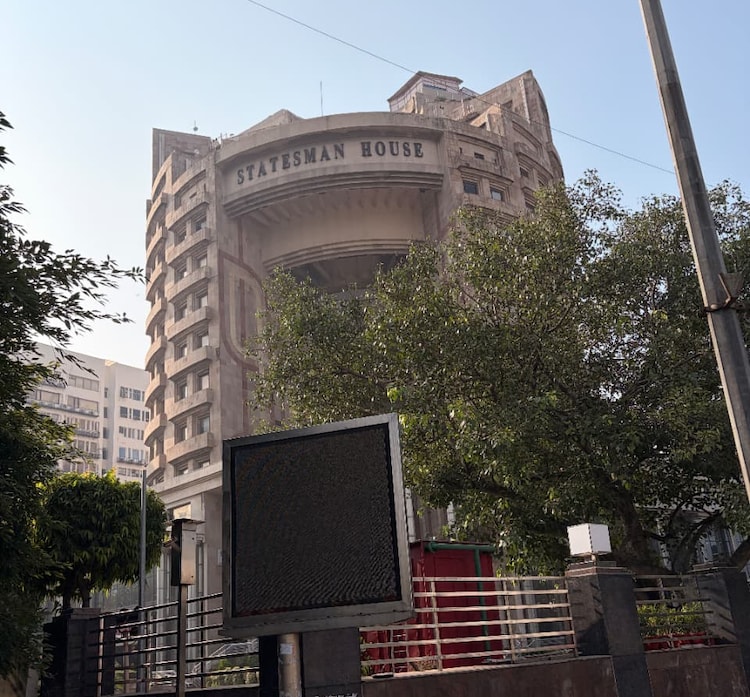
I was in Connaught Place (CP) to find out how the protests and the restrictions around the area had affected businesses, daily wage earners and those whose livelihoods depend on people stepping out of their homes. I began with some of the area’s best-known establishments, expecting them to offer a sense of how the disruption had affected customer footfall.
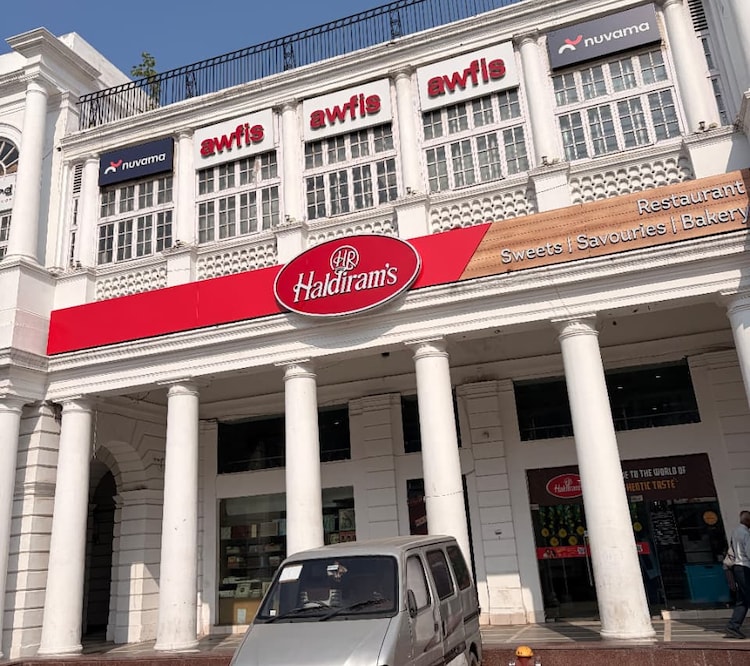
My first stop was Haldiram’s, in the heart of CP. The store staff were cautious when I asked to speak to the manager. I was asked to wait and even offered coffee, but after some time, I was told that the store could not offer a comment at that moment. A supervisor, who did not wish to be named, said the outlet had not noticed much of a difference in business.
At Kake Da Hotel, another popular name in the area, the manager was unavailable. A staff member, who also did not wish to be named, offered a different account.
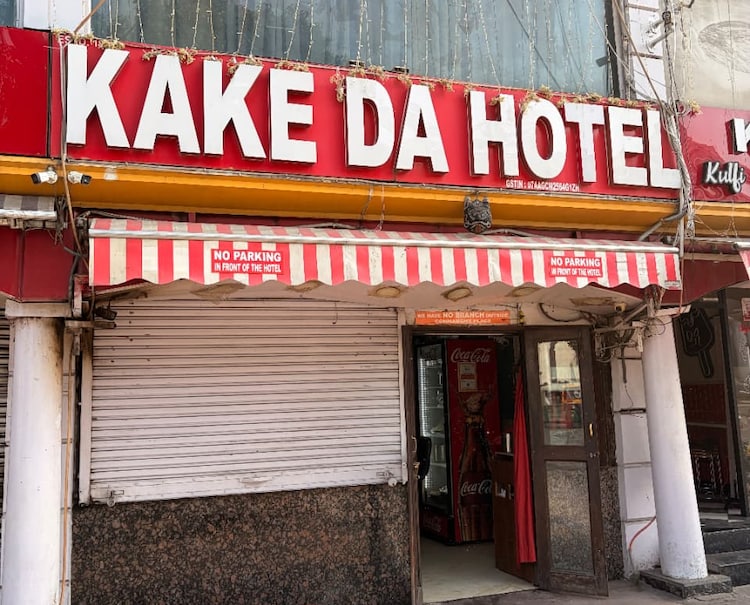
Business had been affected on Monday, he said, as footfall dropped amid the march and the lockdown-like situation. The anxiety around the protests, he added, had made people hesitant to visit CP and nearby areas.
Two well-known establishments, two different accounts. The impact, it seemed, was not uniform. But as I moved around the area, I began to notice that the protests had left a mark well beyond the question of how many customers were walking into a restaurant or a shop.
There was a peculiar hesitation in some conversations. At a few establishments, the moment I mentioned the word ‘protest’, people became guarded. Some politely declined to speak, while others appeared uncomfortable discussing the situation at all.
It was not always easy to tell whether the hesitation came from a reluctance to comment on a sensitive issue or simply from the uncertainty surrounding the situation. Either way, the word seemed to change the mood of the conversation.
The contrast was striking. Some staff members remained courteous, offered refreshments and listened to my questions before declining to comment. Others preferred not to engage. For people trying to run their businesses, the protests were not merely a subject for public discussion. They were an immediate disruption to their day.
The sharpest sense of anxiety, however, came from the roadside vendors.
As I walked around CP, I approached roadside sellers of mobile covers, screen guards, socks, handkerchiefs and other small items. These were people who spread out their goods on the pavement and depended on daily sales to earn a living.
Several seemed particularly anxious when I approached them. Some were reluctant to set up their goods because they feared officials from the Municipal Corporation of Delhi (MCD) or the police might confiscate them.
A few appeared to be trying to work out who I was and why I was asking questions. Their apprehension was understandable: for someone whose livelihood is spread out on a sheet on the pavement, the fear of losing that stock can be as immediate as the fear of losing a day’s earnings.
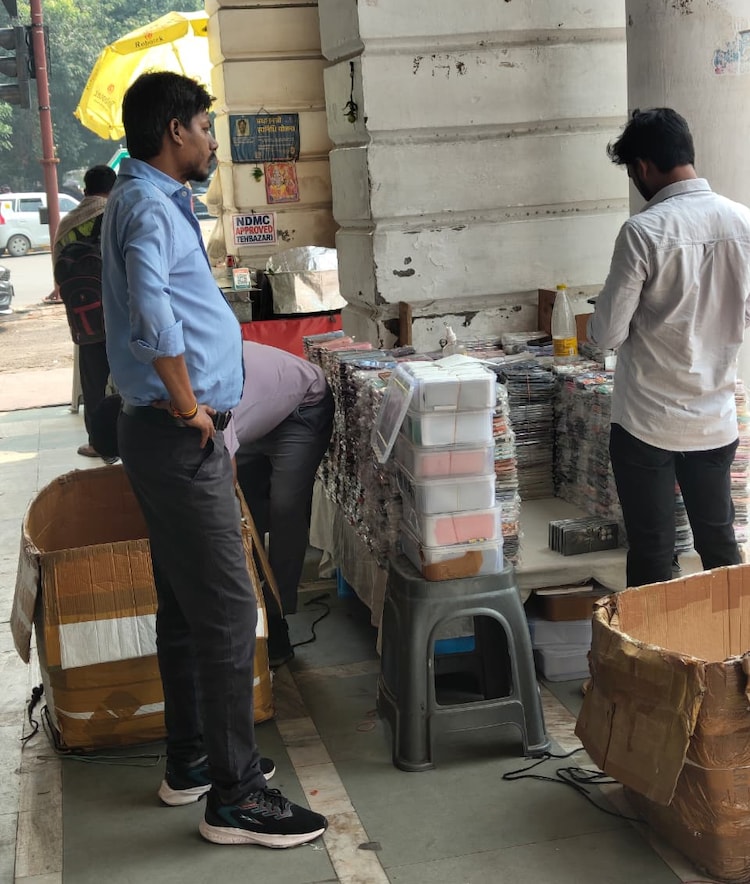
Some of their responses could almost have been turned into memes. ‘Bhaiya, humko protest nahi karna,’ was the sentiment that came through in their anxious attempts to explain themselves.
There was an irony to it. I had come to ask how the protests were affecting their livelihoods, but some vendors seemed worried that the person asking the questions might himself have the authority to take away their goods.
The humour was difficult to miss, but so was the vulnerability underneath it. These were not necessarily people who had anything to do with the protest. They were trying to sell phone accessories, socks and other everyday items. Yet even putting out their stock for sale had become a source of anxiety.
Their fear of confiscation was not the same as an actual seizure, and they did not all describe the same experience. But the hesitation itself offered a glimpse into how uncertain their working conditions felt to them.
The difference between a busy street and a busy market became clearer as I spoke to more people.
Outside Statesman House, a vendor selling gulab jamun, rasgulla, halwa and other sweets told me that his food items usually sold out on a normal day. On Monday, however, he had been left with unsold stock.
When I asked to try some sweets, he asked me to wait because the existing stock was no longer fresh. Freshly made rasgullas arrived shortly afterwards, and he offered me those instead.
It was a small exchange, but it said something about the nature of his business. Unlike a gift shop owner who can keep merchandise on the shelves, a seller of prepared food has to contend with the fact that unsold stock does not stay fresh indefinitely. A day of weaker sales can leave him with goods that cannot simply be sold the next morning.
At one point, the vendor asked me whether I thought the protests were right or wrong. Instead of giving him an answer, I asked what he thought.
His response was straightforward: whether right or wrong, it was bad for business.
It was perhaps the simplest way to describe the predicament facing many people I met. They were not necessarily interested in debating the reasons for the protest. They were concerned about whether customers would turn up, whether they could set up their stalls and whether they would earn enough that day.
At Giggles, a gift shop in E Block that has been operating for 15 years, owner Gauravjeet Kochar said the business had been forced to close on Saturday and Sunday. Monday, normally a day when he would expect customers to return, brought little relief.
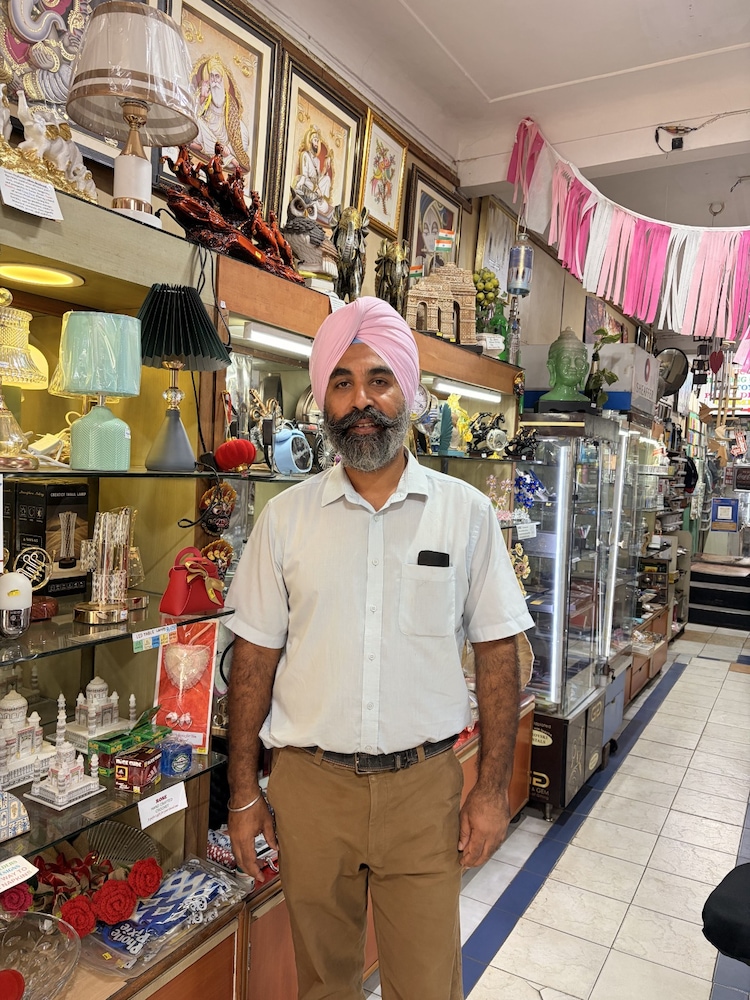
“We were forced to close down on Saturday which is a big business day for us. Sunday we were also closed,” Kochar said.
He said customers had stayed away because they were uncertain about whether CP would remain accessible, whether traffic would be disrupted and whether they might get caught in the protests.
“Monday no one showed up because they felt that there’s still a confusion and there’ll be traffic jams and protests which there were,” he said.
Kochar said the drop in footfall was particularly worrying because businesses continued to carry fixed costs, including rent, salaries and electricity bills, regardless of whether customers walked in.
“In the last three days it’s been dreadful as in there have been no sales at all,” he said.
His concern went beyond the immediate loss. With Diwali approaching, the coming weeks would normally be an important period for gift shops, both for corporate orders and for people buying presents for friends and family.
“We are hopeful that people will still come back but we are very close to Diwali. It’s only one month away. It’s one of our biggest shopping seasons,” Kochar said.
For a business that depends on shoppers making a conscious decision to visit the market, uncertainty can be costly. Customers have alternatives. If they fear that a particular market will be difficult to reach, they can shop elsewhere instead.
That means the effects of a disruption may linger even after roads reopen and crowds disperse. The immediate closure is one problem; persuading customers to return is another.
The impact was not confined to shops and stalls. Cab driver Sudheesh Kumar Yadav said his work had also suffered because some areas were closed.
He said that before the disruption, he would generally get a ride every 10 to 15 minutes while operating in and around the area. Now, he was waiting much longer.
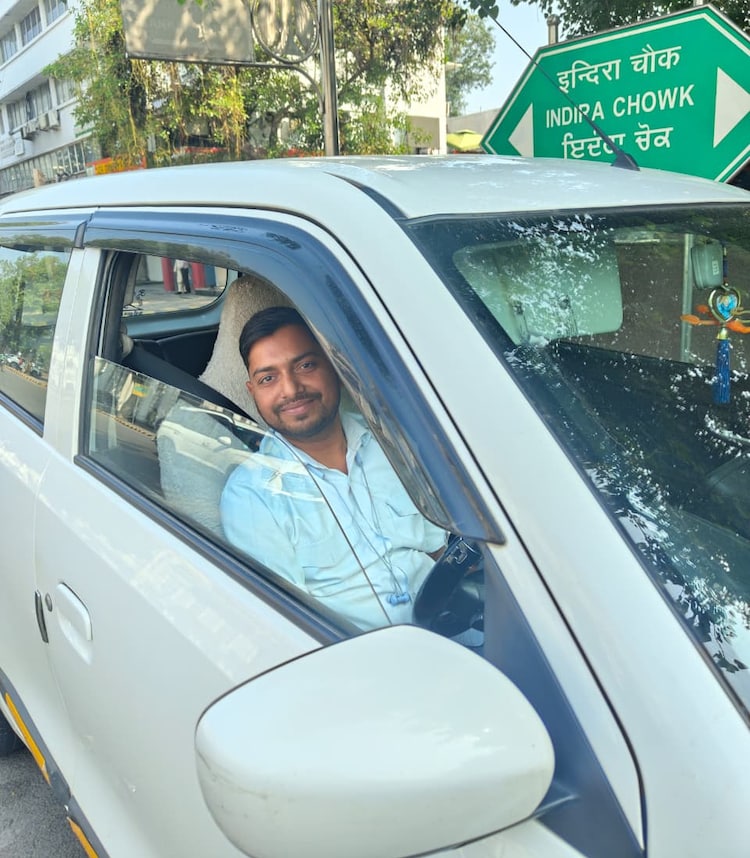
“Today, we have to wait for 1-1.5 hours. But we are not getting a ride,” Yadav said.
He estimated that his daily earnings, which could be around Rs 1,000, had fallen to Rs 400-500 when the restrictions affected the areas in which he operated.
“If you consider that some areas are closed, then it is difficult to get Rs 400-500 per day,” he said.
For cab drivers, the problem is not necessarily that every road is empty. It is that restrictions, diversions and uncertainty can make it harder to find passengers and complete trips. A busy area can still be a difficult place to earn a living if movement through it is disrupted.
The concerns extended beyond CP. Brijesh Goyal, chairman of the Chamber of Trade & Industry (CTI), told me over the phone that traders had reported lower footfall not only in Connaught Place and Janpath but also in other major markets across Delhi.
According to Goyal, people were reluctant to step out amid the protests and uncertainty over travel. Metro services being shut, roads being blocked and the lack of clear travel routes had added to the anxiety, he said.
He estimated that the disruption had led to losses of around Rs 2,000 crore over three days across Delhi’s shops and services businesses, including petrol pumps, hotels and restaurants.
Goyal’s figure is an estimate and was not independently verified. But his account points to the wider concern among traders: when people are unsure whether they can reach a market, many may simply decide not to go out.
He also said the disruption came at a time when businesses were looking towards the beginning of Navratri and the run-up to the festive season to draw customers.
By the time I had finished speaking to shop staff, vendors, a gift shop owner and a cab driver, it was clear that there was no single account of the business impact.
Haldiram’s supervisor said the outlet had not noticed much of a difference. A staff member at Kake Da Hotel reported a fall in footfall on Monday. Giggles’ owner described three days without sales, while a cab driver spoke of daily earnings that had nearly halved. Roadside vendors worried about whether they could put out their goods at all. A sweet seller was left with stock that would usually have sold out.
Their circumstances were different, and so was the scale of the loss each described. But all depended, in one way or another, on people being able to move around freely and spend money.
The quietness of Tuesday morning outside Statesman House was a reminder of how quickly the atmosphere can change. On Monday, the area had been packed with protesters. On Tuesday, I was walking through a quieter stretch, trying to understand what the disruption had meant for those who worked there.
For some, the protests had meant a temporary closure. For others, fewer customers, longer waits for rides or goods left unsold. For the smallest vendors, even the act of setting up for the day came with a fear that their stock might be taken away.
The sweet seller’s answer stayed with me. Whether the protests were right or wrong, he said, they were bad for business.
It was not a verdict on the protests. It was a statement about his livelihood.
And that, perhaps, is what the same street can mean to different people: a place to assemble and protest for some, a place to shop for others, and a workplace for those who need the day to bring in enough money to return tomorrow.