
Homebuyers in Delhi-NCR are increasingly opting for larger homes and higher-value properties, with 3BHKs emerging as the preferred configuration and Gurugram’s key growth corridors witnessing stronger demand for spacious, amenity-rich residences, according to the ANAROCK Consumer Sentiment Survey – H1 2026 has said.
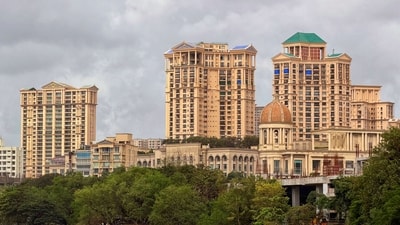
Gurugram’s key growth corridors, such as Dwarka Expressway, Southern Peripheral Road (SPR), Sohna Road and New Gurugram, are seeing rising demand as improved connectivity and new infrastructure drive residential development. These emerging micro-markets are increasingly attracting buyers looking for larger, premium homes with better amenities and long-term value.
The survey, which covered 8,320 respondents aged 23-77 years across 14 cities, found that 48% of homebuyers prefer 3BHK homes, making them the most sought-after configuration. Delhi-NCR recorded a 53% preference for 3BHKs, among the highest across the surveyed markets. The preference for 4BHK and larger homes has also increased to nearly 5%, from around 3% in H1 2024, while 2BHKs remain the second-most preferred configuration at 38%.
ANAROCK Group chairman Anuj Puri said the preference for larger homes was visible across most major markets, although its intensity varied. Ahmedabad recorded the highest preference for 3BHK homes at 57%, followed by Chennai and Delhi-NCR at 53% each, and Hyderabad at 52%. Bengaluru and Kolkata stood at 46% each, Pune at 47%, while Mumbai Metropolitan Region recorded the lowest preference at 39%.
Shift towards larger homes reflected in buyers’ budgets
The ₹90 lakh- ₹1.5 crore segment has emerged as the most preferred budget range, with 34% of respondents choosing it, followed by 27% looking at homes priced above ₹1.5 crore. The survey noted that preference for homes priced below ₹45 lakh has declined significantly over the years, while demand for higher-value properties has strengthened.
For , the trend is particularly significant as developers report increasing demand for larger configurations across established and emerging residential corridors. Sudeep Bhatt, director-strategy, Whiteland Corporation, said the shift was translating into stronger demand for spacious residences in Gurugram NCR, with buyers increasingly seeking privacy, premium amenities, better planning and long-term value. “The company’s move towards larger 4BHK configurations at reflected this changing preference,” he said.
The premiumisation of demand is being driven substantially by end-users rather than investors. Sixty-eight per cent of respondents said they were buying homes for self-use, compared with 32% for investment. Rajjath Goel, managing director, MRG Group, said the findings reflected a change in housing aspirations, with buyers increasingly looking for homes that offer more than space.
“The preference of customers for buying 3 BHK apartments, 4 BHK-plus apartments and wanting to buy in the ₹90 lakh – ₹1.5 crore segment indicates the trend towards larger and value-added housing. Importantly, with 68% purchasing for self-use, this premiumisation is being driven by changing lifestyle aspirations. We believe the next phase of housing will be defined by new-age, design-led homes where intelligent planning, functionality and space-driven luxury come together to create enduring lifestyle value,” he said.
Pradeep Aggarwal, Founder and Chairman, Signature Global (India) Ltd said that this survey clearly mirrors what we are witnessing on ground — homebuyer aspirations have matured significantly. “Today’s buyers are not just looking for a roof over their heads; they want premium living experiences with world-class amenities, superior construction quality, and trusted developer credentials. This shift is especially visible in high-growth micro-markets like Southern Peripheral Road and Dwarka Expressway, where we continue to see robust end-user demand for well-planned, larger format homes,” he said.
Rishabh Periwal, senior vice-president, Pioneer Urban Land and Infrastructure Ltd, said the rising preference for larger homes was also evident in Gurugram, where buyers were seeking residences combining generous living spaces with premium amenities and a broader lifestyle proposition. Adil Altaf, CEO, ANHAD Developers, similarly said Gurugram buyers were increasingly looking beyond additional square footage towards thoughtful layouts, privacy, premium amenities and homes that could adapt to changing family requirements.
Shantanu Gambhir, co-founder and MD, Rise Infraventures, said the trend was being shaped by buyers’ focus on space, functionality and long-term value. “The report findings reveal a clear fact that buyers are now giving preference to space, function, and long-term value in property purchases. With 68% of buyers purchasing for self-use, end-user demand remains a strong market driver, reflecting sustained consumer confidence. Besides, the preference for bigger and larger homes further highlights an evolving aspiration for a more spacious, well-planned living experience amongst homebuyers.”
Despite rising property prices, overall purchase intent remains resilient. Sixty-five per cent of respondents were at least moderately concerned about the current price surge, while 40% viewed rising prices as a long-term trend. Yet, 44% intended to proceed with their planned purchase, while 38% may delay it slightly. Only 18% said they may postpone indefinitely or cancel their purchase. Among those affected, affordability was the biggest constraint at 44%, followed by fewer property options within budget at 32%, the survey showed.
Rising prices are changing where and when homebuyers choose to purchase
The survey also found that rising prices are changing where and when buyers purchase rather than weakening the underlying demand for homeownership. Buyers affected by affordability are increasingly considering peripheral locations, delaying purchases or temporarily opting to rent.
New launches are also gaining traction. About 34% of respondents preferred new-launch projects, compared with 18% who preferred ready-to-move-in homes. As of H1 2026, the ratio of ready homes to new launches stood at 18:34, compared with 30:25 in H1 2022. Developer reputation emerged as the leading factor in selecting a new project at 34%, followed by pricing benefits at 21%.
Also Read:
Real estate also remains the preferred investment asset class, with 60% of respondents choosing it over stocks at 20%, gold at 11% and fixed deposits at 9%. The survey further found that 44% of respondents who invest in non-real-estate assets plan to use future investment gains towards buying a home.
Also Read: