CIBIL Score Explained: How to Improve It in 2026
cibil-score
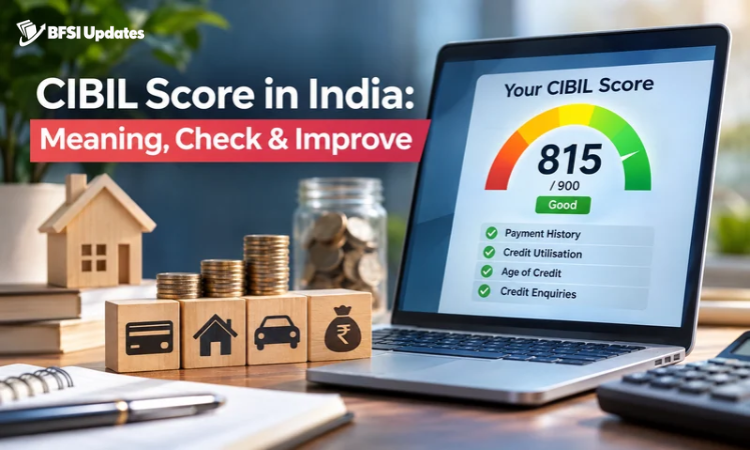
A CIBIL score is a three-digit summary of how you have handled credit. It can influence a lender's assessment when you apply for a home loan, personal loan or credit card. The score ranges from 300 to 900; a higher score generally indicates a stronger credit history, but it does not guarantee approval.
This guide explains what the number means, how to check your credit report in India and practical ways to improve your credit profile in 2026. It also covers the RBI's updated credit-information reporting schedule that took effect on 1 July 2026.
What is a CIBIL score?
A CIBIL score is a three-digit number calculated by TransUnion CIBIL from your credit history. Banks and other lenders share details of credit accounts and repayment behaviour with credit information companies. The score gives lenders an initial view of how you have managed borrowed money.
Your CIBIL report is the detailed record behind the number. It can show personal information, loans and cards, balances, payment history and lender enquiries. The score is a snapshot; the report helps explain it and may reveal an incorrect account or overdue entry.
What is a good CIBIL score in India?
The CIBIL scale runs from 300 to 900. A score closer to 900 is generally more favourable. 750 or above is commonly treated as good, but this is a market rule of thumb, not an RBI-mandated cut-off. Lenders also assess income, existing EMIs and repayment capacity.
Remember: A high CIBIL score improves your credit profile; it does not guarantee a loan, a particular interest rate or a credit-card limit. A lender can decline an application even when the score is strong.
India has four RBI-registered credit information companies: TransUnion CIBIL, Experian, Equifax and CRIF High Mark. Scores may differ because data, update timing and scoring models can vary.
How is a CIBIL score calculated?
CIBIL assesses patterns in borrowing and repayment. Its exact scoring formula and factor weightings are proprietary; percentage breakdowns online should not be treated as official. Main factors include:
- Payment history: Timely EMIs and card payments support your record; delays, defaults and overdue amounts can hurt it.
- Credit utilisation: This is the share of your available card limit in use. High utilisation can signal credit dependence.
- Age of credit: Older, well-managed accounts provide a longer view of repayment behaviour.
- Recent enquiries: Several applications in a short period can make lenders cautious. A lender's hard enquiry may have a marginal impact.
Checking your own score is a self-check and does not lower it. That is different from a lender accessing your report when you apply for new credit.
How to check your CIBIL score and credit report
A CIBIL score check and a careful review of your credit report can help you identify issues early. For a credit report in India, request your score and report through the official TransUnion CIBIL website. Register or sign in, complete identity verification and access the report. Avoid unsolicited links or messages promising an instant score increase.
RBI directions provide for one free full credit report, including the score, once per calendar year from every credit information company, subject to eligibility and identity verification. TransUnion CIBIL says that anyone who used its free report on or after 1 January 2026 can access the next one from 1 January 2027.
Check your identity details, account ownership and status, balances, overdue amounts, payment history and lender enquiries. Look for unfamiliar loans or cards, duplicate entries and payments wrongly marked late.
Does checking your own score affect it? No. CIBIL says your own score check does not impact the score. A lender's enquiry made after a credit application is different and may have a marginal impact.
Know where your credit profile stands
BFSI Updates has a partner-assisted CIBIL score-check option through which you can request a secure link to access your score and report. Review the consent and contact terms before submitting details. Never share an OTP, password or card PIN with anyone.
Explore the CIBIL score-check optionHow to improve your CIBIL score in 2026
There is no reliable shortcut that can repair a credit profile overnight. To improve a credit score in India, start by correcting inaccurate information and establishing a consistent pattern of responsible borrowing.
1. Pay every EMI and card bill on time
Set reminders or suitable auto-debits for each due date, and keep enough money in the linked account. A simple monthly repayment calendar can help prevent missed bills.
2. Keep credit card utilisation low
Around 30% or less is a commonly cited utilisation guideline, not a guaranteed threshold. Pay the bill in full where possible; carrying a balance or paying interest is not required to build a score.
3. Apply for new credit selectively
Compare eligibility, fees and terms first. Several hard enquiries in a short period may make lenders cautious, so apply only when you have a genuine need and a reasonable chance of qualifying.
4. Review your report and dispute errors
Dispute unfamiliar loans, duplicate entries, incorrect balances or payments wrongly shown as late. Contact CIBIL and the lender, keeping receipts and complaint numbers. The reporting institution must verify and correct its data at source.
5. Manage older accounts and your credit mix sensibly
A long, positive history can be useful. Before closing an older card, consider its fees and how closure affects your total limit. Do not take unnecessary loans just to create a credit mix; borrow only what you can repay.
6. Address overdue accounts and avoid misleading shortcuts
Contact the lender, confirm the amount due and agree on a realistic repayment plan. A loan marked “settled” is not the same as one fully repaid and closed. Be wary of firms promising to erase accurate negative history or guarantee a score increase.
7. Allow time for the report to reflect better behaviour
Keep paying on time and avoid unnecessary applications. Payments do not necessarily appear the same day; lenders must report them and bureaus must process the data. Track progress across reporting cycles.
RBI's updated credit reporting schedule in 2026
Credit reports depend on data supplied by banks, NBFCs and other covered credit institutions. RBI's amended directions for credit information companies took effect on 1 July 2026. They set reference dates on the 9th, 16th, 23rd and last day of each month. Incremental information for the first three dates is due within four calendar days; the full month-end file is due by the fifth day of the following month.
| Reference date | Submission requirement |
|---|---|
| 9th, 16th and 23rd | Incremental account information within 4 calendar days |
| Last day of the month | Full credit-information file by the 5th day of the next month |
The schedule is more frequent than the earlier fortnightly cycle, but updates are not instant. Data submission and processing take time. Contact the lender if a correct payment is still missing after the relevant cycle.
What if your CIBIL score is low or unavailable?
If your score is low, read the report before applying for another loan. Identify overdue balances, frequent enquiries and incorrect entries. Repay accurate dues and dispute errors with supporting evidence.
RBI directions provide for ₹100 per calendar day when an eligible correction complaint remains unresolved beyond 30 calendar days, subject to the prescribed conditions. A “no history” or “not available” status for someone new to formal credit is different from a low score caused by missed payments.
KEY TAKEAWAY
A stronger score is built through consistent credit behaviour
Pay on time, keep card balances low, apply selectively, review your report and correct errors. RBI's 2026 reporting schedule can help updates reach bureaus sooner, but disciplined repayment over time remains the foundation. A good score supports your application; it does not replace a lender's full assessment.
Stay informed about banking and personal finance
Explore more banking and financial-services coverage from BFSI Updates, along with tools that can help you plan borrowing and repayments.
Explore Banking and Finance updatesYou can also browse the BFSI Updates money tools.
Disclaimer: This article is for informational and educational purposes only. It is not financial, investment, insurance, tax or legal advice. Readers should assess their circumstances independently and consult qualified professionals where necessary. Credit-score ranges and lending decisions vary by bureau and lender.
Frequently asked questions
1. What is a CIBIL score?
It is a three-digit summary of your credit history calculated by TransUnion CIBIL. It ranges from 300 to 900 and helps lenders assess your borrowing and repayment behaviour.
2. What is a good CIBIL score in India?
A score of 750 or above is commonly considered good, but there is no universal RBI approval cut-off. Lender policies and your overall financial profile also matter.
3. Does checking my own CIBIL score reduce it?
No. CIBIL says your own score check does not affect it. A lender's hard enquiry after a credit application is different and may have a marginal impact.
4. How can I improve my CIBIL score?
Pay EMIs and card dues on time, reduce high card balances, avoid repeated credit applications and correct inaccurate entries in your report.
5. How often is credit information updated in 2026?
From 1 July 2026, RBI's amended directions set reference dates on the 9th, 16th, 23rd and last day of each month. Submission and bureau processing still take time.
6. What credit utilisation should I maintain?
Keep card utilisation low. Around 30% or less is a commonly used guideline, not an official guarantee or fixed scoring threshold.
7. Do loan or credit card applications affect my score?
A lender's hard enquiry may have a marginal impact. Several applications in a short period can make lenders cautious, so apply selectively.
8. Can CIBIL remove an incorrect entry?
You can raise a dispute with CIBIL, which coordinates with the lender that supplied the information. The lender must verify and correct its data at source.
9. Can I get a loan with a low CIBIL score?
It may be possible, but approval depends on lender policy, income, repayment capacity, existing obligations, collateral where relevant and the reason for the low score.
10. Can I get a free CIBIL report every year?
Yes. RBI directions provide for one free full credit report, including the score, once in a calendar year from each credit information company, subject to eligibility and identity verification.
Disclaimer: This article is for general information and does not constitute investment, tax or legal advice. Markets and rates change; please verify with official sources or a qualified professional before you act.