
For more than a century, Lyons Range in Kolkata carried the same weight in Bengal that Dalal Street carries in Mumbai today. Brokers shouted bids across wooden trading floors. Industrialists shaped the fortunes of the region’s jute mills, tea estates and shipping houses from inside its walls. It was, for a very long time, the financial heartbeat of eastern India.
Today, that floor is silent. The Calcutta Stock Exchange (CSE) has not facilitated a single trade since April 2013. And after more than a decade of fighting to stay alive, the exchange has finally stopped fighting.
The exchange is suddenly back in the news for a different reason. The , framing it as a way to reclaim Kolkata’s place as a financial centre and bring fresh investment and jobs to eastern India.
That announcement has put a long-dormant institution back in the spotlight and left many people asking the same basic question: why did it shut down in the first place?
Here is the full story of how one of Asia’s oldest stock exchanges ended up here.
The roots of stock trading in Kolkata go back to 1830, when bourse activity took place informally under a neem tree, with brokers conducting business in the open without any permanent shelter.
The inconvenience of this eventually pushed brokers to organise themselves. In May 1908, an association was formally constituted under the name Calcutta Stock Exchange Association, based at 2, China Bazar Street, with 150 members.
The exchange was granted permanent recognition by the Central Government on April 14, 1980, under the Securities Contracts (Regulation) Act, 1956.
For decades, it functioned as one of India’s most important financial institutions. It is widely described as one of the oldest stock exchanges in Asia and was, at its peak, the second or third largest bourse in India.
The exchange’s long decline can be traced back to 2001, when stock manipulation by broker Ketan Parekh exposed major weaknesses in CSE’s systems.
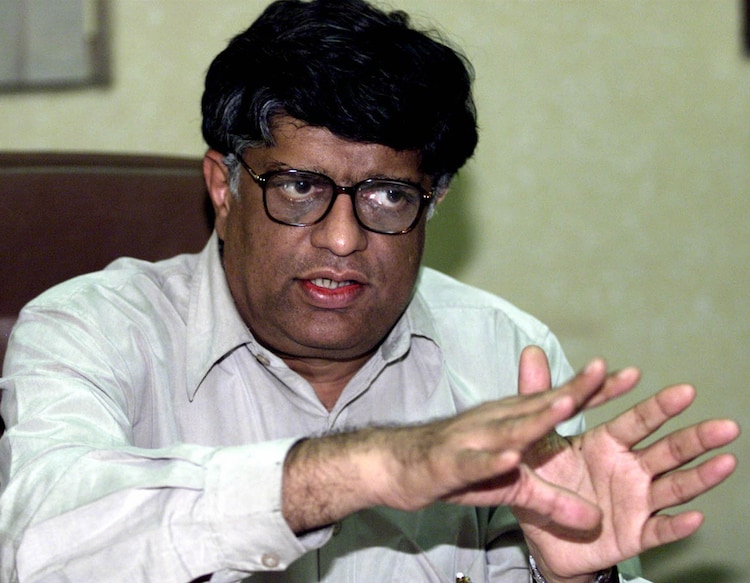
Parekh and his associates rigged the prices of stocks listed on the exchange, triggering a severe payment crisis that badly damaged investor confidence and exposed serious governance problems.
The exchange never fully recovered. Between 2005 and 2012, CSE’s daily trading turnover fell by more than 90 per cent, as investors and listed companies steadily drifted towards the National Stock Exchange (NSE) and the Bombay Stock Exchange (BSE), both of which were building large-scale electronic trading platforms with nationwide reach.
The Securities and Exchange Board of India (Sebi) suspended trading on CSE’s C-STAR platform in April 2013 for failing to comply with regulatory norms.
The specific reason mattered a great deal. CSE had managed to fulfil two of Sebi’s core requirements, but it failed to establish or tie up with a clearing corporation, a critical piece of market infrastructure responsible for settling trades and managing risk.
Sebi refused to grant CSE a time extension on technical grounds, and trading on the exchange ground to a complete halt.
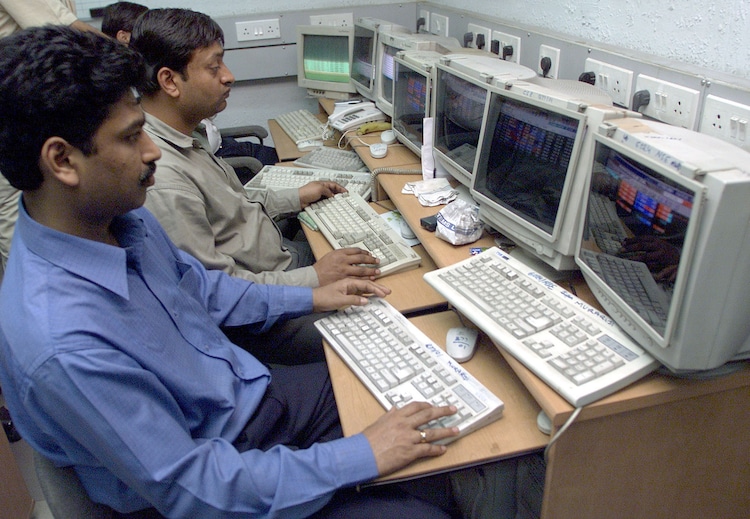
CSE was far from alone. Between 2013 and 2015, seventeen regional stock exchanges across India either exited voluntarily or were forced out under Sebi’s exit policy, including bourses in Bangalore, Hyderabad, Madras, Pune, Coimbatore, Ludhiana, Jaipur and several other cities.
Companies that were listed only on these exchanges were ordered to delist and migrate to BSE or NSE. It was the effective end of India’s regional stock exchange system, with capital markets consolidating sharply around Mumbai.
After the 2013 suspension, CSE’s only remaining function was to give its own members a way to trade on the NSE, through an arrangement signed in 2011 and approved by Sebi. This contract was automatically extended until September 2021 and kept the exchange technically alive even as its own trading floor stayed shut.
But the arrangement was on shaky ground for years. In 2020, Sebi questioned NSE on why it was continuing the agreement despite CSE’s persistent functioning deficiencies. NSE eventually terminated the trading arrangement on July 18, 2023. The Calcutta High Court briefly stayed this termination after CSE challenged it, arguing the move would completely cripple the exchange’s operations, but a division bench of the court vacated that stay on November 17, 2023.
By this point, the numbers told their own story. CSE’s annual report for financial year 2022-23 showed total revenue of just Rs 17.88 crore and profit of barely Rs 4 crore, even as the exchange continued to carry 1,842 listed companies and 400 registered trading members on its books, almost all of them inactive in any meaningful trading sense.
CSE did not go quietly. Its board fought the 2013 suspension through the courts for years, approaching both the Calcutta High Court and the Supreme Court to challenge Sebi’s order.
The fight came at a steep cost. Every year spent in litigation meant lost revenue, brokers leaving for other markets, and a shrinking workforce, all while the exchange remained barred from actually trading.
The Calcutta High Court granted CSE extensions on February 19, 2024, and again on August 19, 2024, giving it more time to meet Sebi’s regulatory requirements.
Specifically, CSE needed to establish clearing corporation arrangements and maintain a net worth of at least Rs 100 crore, as mandated under the Securities Contracts (Regulation) (Stock Exchanges and Clearing Corporations) Regulations, 2018.
Despite the extensions, CSE could not meet these conditions.
The fight finally ended in December 2024, when CSE’s board withdrew all its pending legal cases and chose to pursue a voluntary exit from the stock exchange business altogether, rather than continue contesting Sebi’s order.
CSE Chairman Deepankar Bose confirmed the decision, saying shareholder approval for the exit was obtained at an Extraordinary General Meeting held on April 25, 2025. CSE formally submitted its exit application to Sebi on February 18, 2025. In response, Sebi formed a working group and appointed a valuation agency to assess the exchange’s assets and liabilities before allowing the exit to proceed.
As part of winding down, CSE rolled out a Voluntary Retirement Scheme for its employees. A one-time payout of Rs 20.95 crore was distributed among staff, alongside an estimated annual saving of Rs 10 crore from reduced overheads. Some employees were retained on contract to complete the compliance paperwork required to formally close the business.
Sebi has also approved the sale of CSE’s property to Srijan Group for Rs 253 crore, a transaction that is contingent on final exit approval being granted.
Once Sebi grants final approval, CSE is expected to convert into a holding company. Its wholly-owned subsidiary, CSE Capital Markets Private Limited, will continue to offer broking services as a registered member of both the NSE and the BSE. This means the CSE brand and a sliver of its original business will technically survive, just not as an independent stock exchange.
As of now, the exit is still not fully final. The matter remains sub judice before the Calcutta High Court, and final approval from Sebi is still pending.
The Calcutta Stock Exchange did not collapse overnight. It was a slow, well-documented decline spanning more than two decades: a scam in 2001 that broke investor trust, a regulatory suspension in 2013 that it could never fully overturn, a decade of fighting in court while losing money every year, and finally, in 2024 and 2025, a board that ran out of options and chose to formally let go.
What began as informal trading under a neem tree in 1830 is, on paper, finally coming to an end.