
Best Credit Cards in India for First-Time Users (2026)
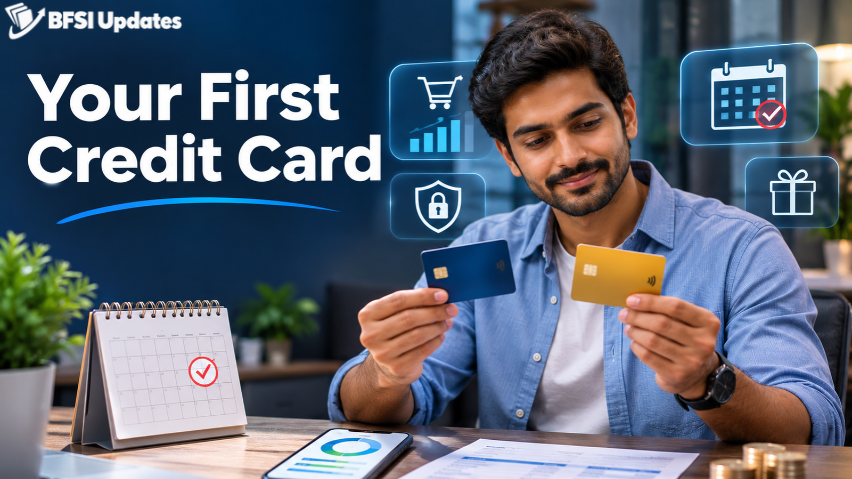
A practical guide to choosing your first card
If you are searching for the best credit card for first-time users in India, start with a simple question: which card can you use regularly, understand easily and repay in full every month? A first card is not a way to increase your income. It is a short-term payment facility that can help establish a credit history when handled responsibly. The right starting option usually has a manageable joining or annual fee, useful everyday benefits and terms that are easy to follow. You can review currently listed credit card offers on BFSI Updates as a starting point, then verify the final terms directly with the issuer.
A beginner-friendly card should be judged on its total cost and how well it fits your normal spending. A high reward rate can be poor value if it applies only to merchants you rarely use, has a low monthly cap or requires spending more than your budget. For a first card, predictable fees, a clear statement and the ability to pay the full bill are often more valuable than premium perks. A monthly spending plan can help; use the BFSI Updates Mobile Budget Planner to map regular expenses before choosing a credit limit.
In this article
- What should first-time users look for in a credit card?
- How do credit cards work for beginners in India?
- Best credit cards in India for first-time users (2026)
- How do the fees and rewards compare?
- How should you choose your first credit card?
- How can a first credit card help build a credit history?
- Important risks and charges every beginner should understand
What should first-time users look for in a credit card?
Start by checking the joining fee and annual or renewal fee. A lifetime-free card has no joining or annual membership fee under the stated offer, but it can still have charges for late payment, cash advances, foreign currency transactions, replacement cards or other services. A paid card may reverse its annual fee after you cross a spending threshold; that waiver is useful only if the spending is already part of your budget.
Next, understand how rewards are earned and redeemed. Cashback may be credited directly to the statement, while reward points can have different values depending on the redemption route. Check eligible merchant categories, minimum transaction values, monthly or quarterly caps, excluded transactions and expiry rules. Fuel, rent, wallet loads, education, insurance, EMI conversions and government payments may not earn rewards on some cards. Read the latest terms rather than assuming every purchase qualifies.
How do credit cards work for beginners in India?
The annual percentage rate (APR) and finance-charge terms deserve special attention. If you do not pay the total amount due by the due date, interest can be charged on outstanding purchases and the interest-free period may be suspended. Credit card interest is generally much more expensive than the value of ordinary reward points. A beginner should treat the card as a payment tool, not as a loan to carry from month to month.
A credit card issuer gives an approved customer a revolving credit limit. You can make purchases up to the available limit, and the transactions appear in a monthly statement. The statement shows the total amount due, minimum amount due, payment due date, transactions, fees, taxes and any applicable interest. Paying the total amount due by the due date is the simplest way to avoid purchase finance charges, subject to the card terms and any cash or other excluded transactions.
The billing cycle is the period during which transactions are grouped into a statement. The due date is the deadline for paying that statement. A purchase made just after a statement is generated may appear in the next cycle, but this is not extra income or free money: it still needs to be paid when billed. Issuers may allow a cardholder to change the billing-cycle date at least once, subject to the RBI directions and issuer process.
Best credit cards in India for first-time users (2026)
The minimum amount due is not the amount you should aim to pay every month. It is the minimum payment specified by the issuer to keep the account from being treated as unpaid under the applicable terms. Paying only this amount can leave a large balance attracting interest, and the interest-free period may be lost. RBI directions require issuers to warn customers that minimum-only payments can stretch repayment over months or years with compounded interest.
- Annual cost: Joining and renewal fees, GST and spend-based fee waivers.
- Reward value: Eligible merchants, redemption rate, caps, exclusions and expiry.
- Repayment terms: APR, finance charges, cash-advance costs and due-date rules.
- Usability: App controls, transaction alerts, statement access and customer support.
A first card can be useful for online and offline purchases, recurring payments and building a record of repayment behaviour. It can also create risks if you spend beyond your income, use cash advances or miss due dates. Before applying, check whether you already have a pre-approved offer from your salary-account bank; an existing relationship may help the bank assess your application, but it does not guarantee approval.
How do the fees and rewards compare?
The cards below are examples worth comparing,not a ranking that guarantees approval or suitability. The selection focuses on entry-level fee structures and clearly described everyday benefits. Fees, eligibility, reward rules and limited-period offers can change; confirm the live product page and Most Important Terms and Conditions (MITC) immediately before applying.
SBI SimplyCLICK is aimed at customers who make a meaningful share of their purchases online. SBI Card lists a joining/annual fee of ₹499 plus applicable taxes, with renewal fee reversal when eligible annual spends reach ₹1 lakh. Its published benefits include 10X reward points on specified online partner merchants, 5X points on other online SBI Card’s official SimplyCLICK page other spends. The listed partners and redemption value are subject to the issuer’s terms.
This card may suit a beginner who already shops with the listed partner brands and can meet the annual-fee waiver threshold through normal spending. It may be less useful if most purchases are offline, if you do not use the partner merchants or if you would increase spending only to earn the voucher or waive the fee. Check exclusions, reward caps, the current partner list and the value of points before calculating expected savings.
IDFC FIRST Bank’s published MITC lists the FIRST Millennia Credit Card with nil joining and annual fees. Its product guide describes a tiered reward structure, including higher reward earning on eligible online and offline spends, with exclusions and thresholds applying. Reward points have a stated redemption value and can be used through the bank’s permitted redemption channels; the exact value you receive depends on the redemption method and current programme rules.
Check the issuer’s latest product terms
A no-annual-fee structure can make FIRST Millennia worth comparing if you want to avoid a recurring membership fee. However, “free” does not mean every transaction is free of charges. Finance charges, cash-advance fees, late-payment charges, forex mark-up and other applicable fees still matter. Check the current product guide and MITC for reward caps, excluded categories, eligibility and the applicable finance-charge rate.
IDFC FIRST Bank’s current credit-card MITCHow should you choose your first credit card?
ICICI Bank describes its Platinum Chip Credit Card as a no-joining-fee and no-annual-fee card for eligible customers under the bank’s terms. It is a basic option to compare if your priority is a simple card from a bank where you already hold an account. Do not assume that the lifetime-free offer is available to every applicant or through every channel; eligibility and the specific offer shown at application govern.
1. Match rewards to your actual spending
A basic card may be more useful than a premium card if you are new to credit and want to learn statement management without paying a high annual fee. Before choosing it, check the latest reward earning and redemption rules, lounge or other benefits if advertised, finance charges, foreign currency mark-up, late-payment fees and whether the offer is genuinely lifetime-free for your application.
2. Compare the full fee schedule
If you have no prior credit history or do not meet an issuer’s unsecured-card criteria, ask banks about a secured credit card backed by a fixed deposit. Before applying, you can also read the BFSI Updates guide to CIBIL scores and credit history to understand the factors that may shape your profile. The issuer may set the credit limit with reference to the deposit and may place a lien on it under the card agreement. The deposit continues to be subject to the bank’s terms; it is not a free source of credit and may not be freely withdrawable while the lien remains.
3. Understand reward caps and exclusions
An FD-backed card can provide a route to start a credit record, but compare the minimum deposit, lien conditions, card fees, interest on the deposit, credit limit, closure process and what happens if dues remain unpaid. Do not lock emergency savings into a deposit simply to obtain a card. Confirm with the issuer how it reports the account to credit information companies.
4. Check eligibility before applying
The comparison below summarises two clear examples from issuer-published fee and benefit information. It is not a complete market survey, and the cards are not directly identical: one charges an annual fee with a spend-based waiver, while the other is listed with nil membership fees. Verify the latest terms before applying because issuers can revise benefits and fees.
5. Apply selectively
A card with a higher advertised reward rate does not automatically deliver the highest value. Calculate the reward you can realistically earn on spending you already do, subtract the annual fee and taxes, and consider redemption restrictions. For a first-time user, a card with fewer moving parts may be easier to manage than a card whose value depends on several partner categories and milestone targets.
6. Pay the total amount due
Choose the category that reflects your actual spending. If you regularly buy from the partner merchants listed by a card, accelerated rewards may be useful. If you prefer not to track categories, look for a straightforward base reward or cashback structure. If you mainly want to establish a credit history, prioritise a low-cost card and reliable repayment rather than premium benefits.
7. Protect your account and review statements
Fees should be compared line by line. Joining and annual fees are only the starting point. Read the MITC for finance charges, late-payment charges, cash withdrawal fees, foreign currency mark-up, over-limit charges if applicable, replacement-card fees and any fees for optional services. GST may apply to fees and charges. The issuer’s schedule at the time of application is the controlling document.
How can a first credit card help build a credit history?
A spending-based fee waiver should be treated as a bonus, not a target. If a card waives its renewal fee after ₹1 lakh in eligible annual spending, do not spend ₹1 lakh just to avoid a ₹499 fee. The extra purchases could cost far more than the fee saved. Excluded categories may also mean that your total card spend does not count towards the waiver. For other household money decisions, browse the BFSI Updates calculator directory and use tools that match your situation.
| Loan arrangement | How a repo-rate change may affect it |
|---|---|
| SBI SimplyCLICK SBI Card | ₹499 + applicable taxes; renewal fee reversal on eligible annual spends of ₹1 lakh. 10X points on specified online partners and 5X on other online spends, subject to terms. |
| IDFC FIRST Millennia | Nil joining and annual fees as listed in the bank’s MITC. Tiered rewards on eligible online and offline spends; exclusions, thresholds and redemption rules apply. |
Before applying, read the eligibility criteria and check the offer shown to you. Issuers can consider age, income, employment, residence, credit history, existing obligations and internal risk policies. The exact criteria differ by bank and product and may not be fully published. A stated minimum income or credit score, where shown, is not a promise of approval. If you want to review your credit profile first, visit the BFSI Updates CIBIL score-check page; checking your own score is different from a lender making an application enquiry.
Important risks and charges every beginner should understand
Avoid submitting many applications in a short period. Each lender may make a credit enquiry when assessing an application, and repeated enquiries can be visible in your credit report. A rejected application does not mean you should immediately apply for several more cards. Check the reason, correct any report error and apply selectively when your profile and documents are ready.
Pay the total amount due, not merely the minimum amount due. Set an automatic payment instruction for the full statement balance if your bank supports it and you maintain sufficient funds. Keep a reminder before the due date and check that the payment has been credited. If a transaction is disputed, contact the issuer promptly through its official channel and continue paying undisputed dues.
Keep your balance comfortably below the credit limit. Credit utilisation is the amount you owe relative to the available limit. For broader money-management resources, the BFSI Updates Money Tools hub brings together available comparison options and financial tools. For example, if the limit is ₹50,000 and the statement balance is ₹15,000, utilisation is 30%. A lower reported balance can help demonstrate restraint, but no single utilisation percentage guarantees a particular score. Do not spend more merely to create activity.
A first card should support disciplined spending
Protect your card details and never share an OTP, PIN, CVV or password with anyone claiming to be from a bank. Enable transaction alerts, use card controls to disable channels you do not need and block the card immediately if it is lost or compromised. For online purchases, use trusted websites and check the merchant name and amount before authorising a payment.
Compare credit card options with BFSI Updates
Review the card issuer’s current fee schedule, reward terms and eligibility conditions before submitting an application. BFSI Updates offers a comparison starting point, but the issuing bank makes the final decision. You can also explore the BFSI Updates Money Tools page for its available financial tools and comparison options.
BFSI Updates credit card offersFor a clearer explanation of credit history and score factors, read the BFSIBFSI Updates guide to CIBIL scores
Sources and further reading
- SBI Card – SimplyCLICK product page: Official SimplyCLICK product page with reward categories, annual fee and renewal-fee waiver conditions.
- IDFC FIRST Bank – Credit Card MITC: Published fee schedule listing FIRST Millennia with nil joining and annual fees.
- ICICI Bank – Platinum Chip offer information: Offer information stating Platinum Chip has no joining or annual fee for eligible customers, subject to terms.
- RBI – Credit Card and Debit Card Directions: Regulatory directions covering billing, interest, minimum amount due and customer-protection requirements.
- TransUnion CIBIL – Consumer Score FAQs: Explanation of payment history, utilisation, credit history depth and credit enquiries as score factors.
Research checked: 26 November 2026. Product fees and reward descriptions were checked against issuer-published pages and documents available on that date. Offers, eligibility and charges can change; verify the latest MITC and product terms before applying.
Disclaimer: This article is for informational and educational purposes only. It is not personalised financial, investment, tax or legal advice, nor a recommendation to apply for a particular credit card. Card features, fees, eligibility, rewards and approval decisions are determined by the issuer and may change. Read the latest product terms and MITC, assess your ability to repay and contact the issuer for account-specific information.
Frequently asked questions
1. Which is the best credit card for first-time users in India?
There is no universal best card. Compare the joining and annual fees, reward rules, issuer eligibility and your usual spending. SBI SimplyCLICK may suit eligible online shoppers, while IDFC FIRST Millennia offers a nil joining and annual fee according to the bank’s published MITC. Verify current terms before applying.
2. Can I get a credit card without a CIBIL score?
Some issuers may consider applicants with limited or no credit history, including through a secured card backed by a fixed deposit. Approval depends on the issuer’s policy, income and other checks. A missing score does not guarantee acceptance or rejection.
3. Which credit card is easiest to get as a beginner?
No card is guaranteed to be easy to obtain. An existing bank relationship or a pre-approved offer may be a useful place to check, but the issuer still assesses your application. If unsecured eligibility is difficult, ask about an FD-backed card and compare its deposit and closure conditions.
4. Is a lifetime-free credit card really free?
A lifetime-free offer generally means no joining or annual membership fee under the stated conditions. Other charges can still apply, including late-payment fees, finance charges, cash-advance fees and foreign currency mark-up. Check the latest MITC and ensure the offer is explicitly shown for your application.
5. What is the minimum salary required for a first credit card?
There is no single salary threshold across all banks and cards. Issuers set their own eligibility criteria and may consider income, employment, residence, credit history and existing obligations. Check the product’s current criteria and the offer displayed by the issuer.
6. Does applying for a credit card affect my CIBIL score?
A lender’s credit enquiry may be recorded when you apply. Several applications over a short period can affect how lenders view your credit profile. Check eligibility first and avoid applying for multiple cards at once. Checking your own CIBIL score is different from a lender enquiry.
7. How much of my credit limit should I use?
Keep utilisation comfortably low and spend only what you can repay. A 30% level is often used as a practical guideline, not a guaranteed scoring threshold or RBI rule. Your reported balance and score can vary with statement timing and bureau updates.
8. Should I pay the minimum amount due or the total amount due?
Pay the total amount due by the due date. Paying only the minimum can leave the remaining balance attracting interest and can suspend the interest-free period. RBI requires issuers to warn customers about the long repayment period and compounded interest that can result from minimum-only payments.
9. Can an FD-backed credit card help build credit history?
It may help some applicants establish a repayment record, subject to the issuer reporting the account and the bureau processing it. Compare the minimum FD, lien, credit limit, fees and closure terms. Do not lock away money you may need for emergencies.
10. How many credit cards should a beginner have?
One well-managed card is usually enough to learn billing, repayment and security habits. Add another only if there is a clear need and you can manage its separate statement and due date. Multiple applications or cards are not necessary to build a healthy credit profile.
Disclaimer: This article is for general information and does not constitute investment, tax or legal advice. Markets and rates change; please verify with official sources or a qualified professional before you act.